





EIN: 16-0768758
Hochstein's History Timeline
Founded to commemorate the late David Hochstein, the David Hochstein Music School Settlement (now known as The Hochstein School) opened on January 2, 1920. From its earliest days, Hochstein has been an open window to knowledge and self-expression, offering lessons and classes to all – regardless of age, skill level, ethnicity, or ability to pay.
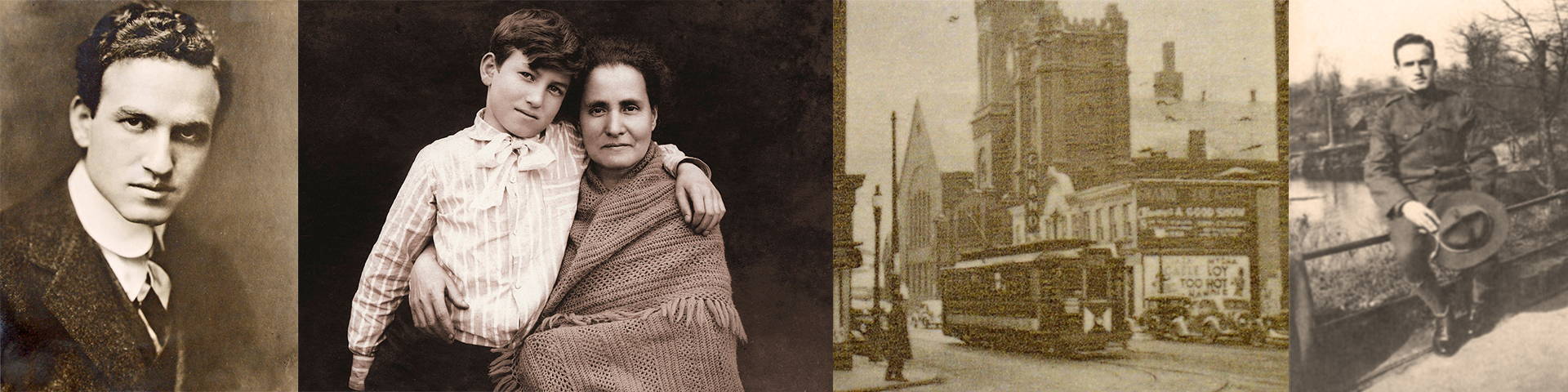
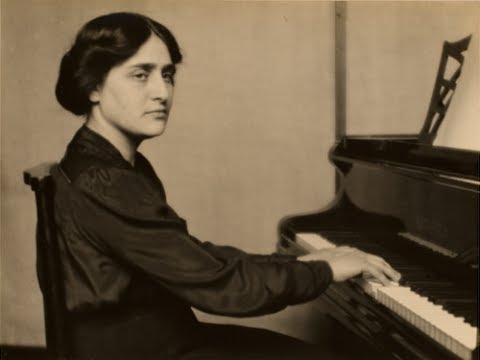
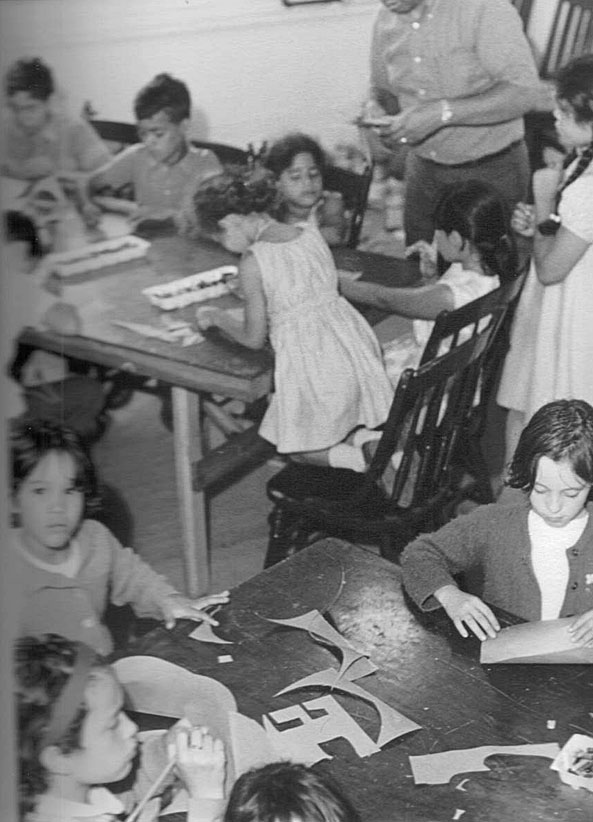
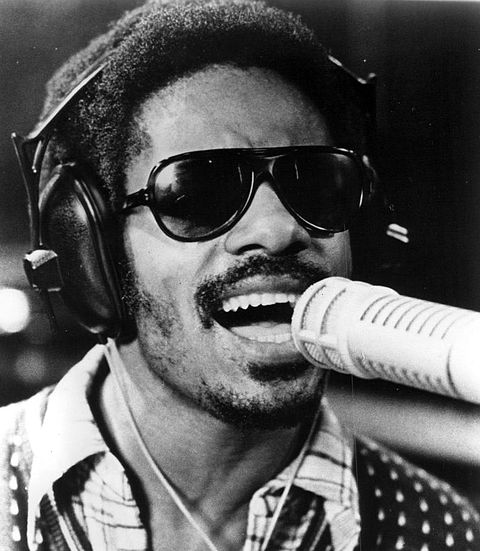
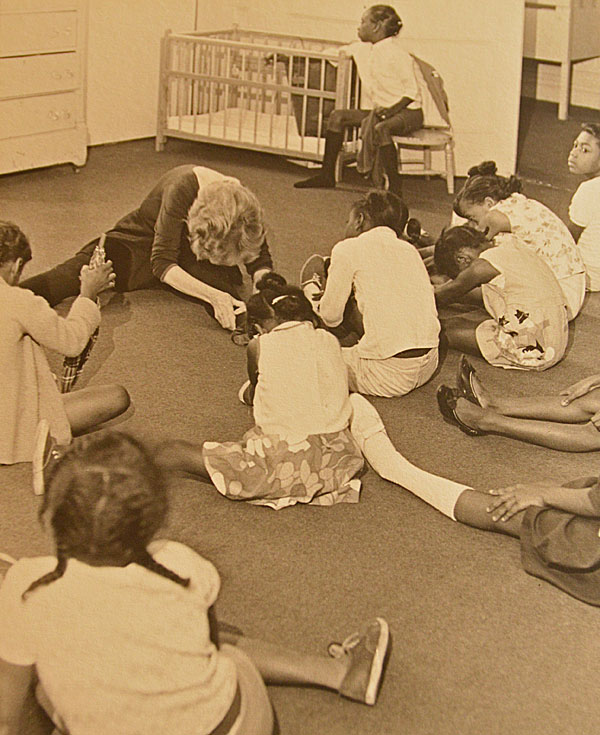
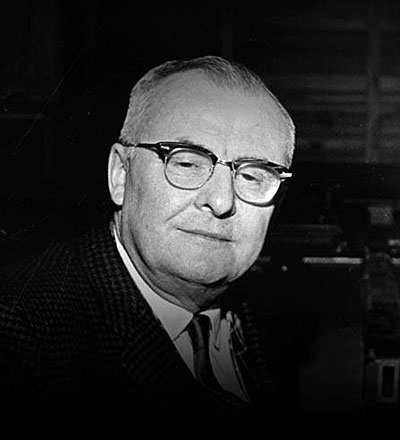
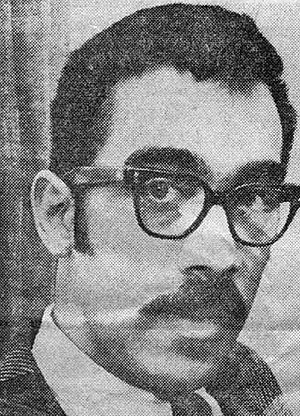
Photos above: David Hochstein, circa 1917; David and his mother, circa 1900; Streetcar moving up Plymouth Ave in front of what is now our building, circa 1939; David in France, circa 1918.
Our Timeline.
Each timeline item has an accompanying photo. Click the timeline title to view.
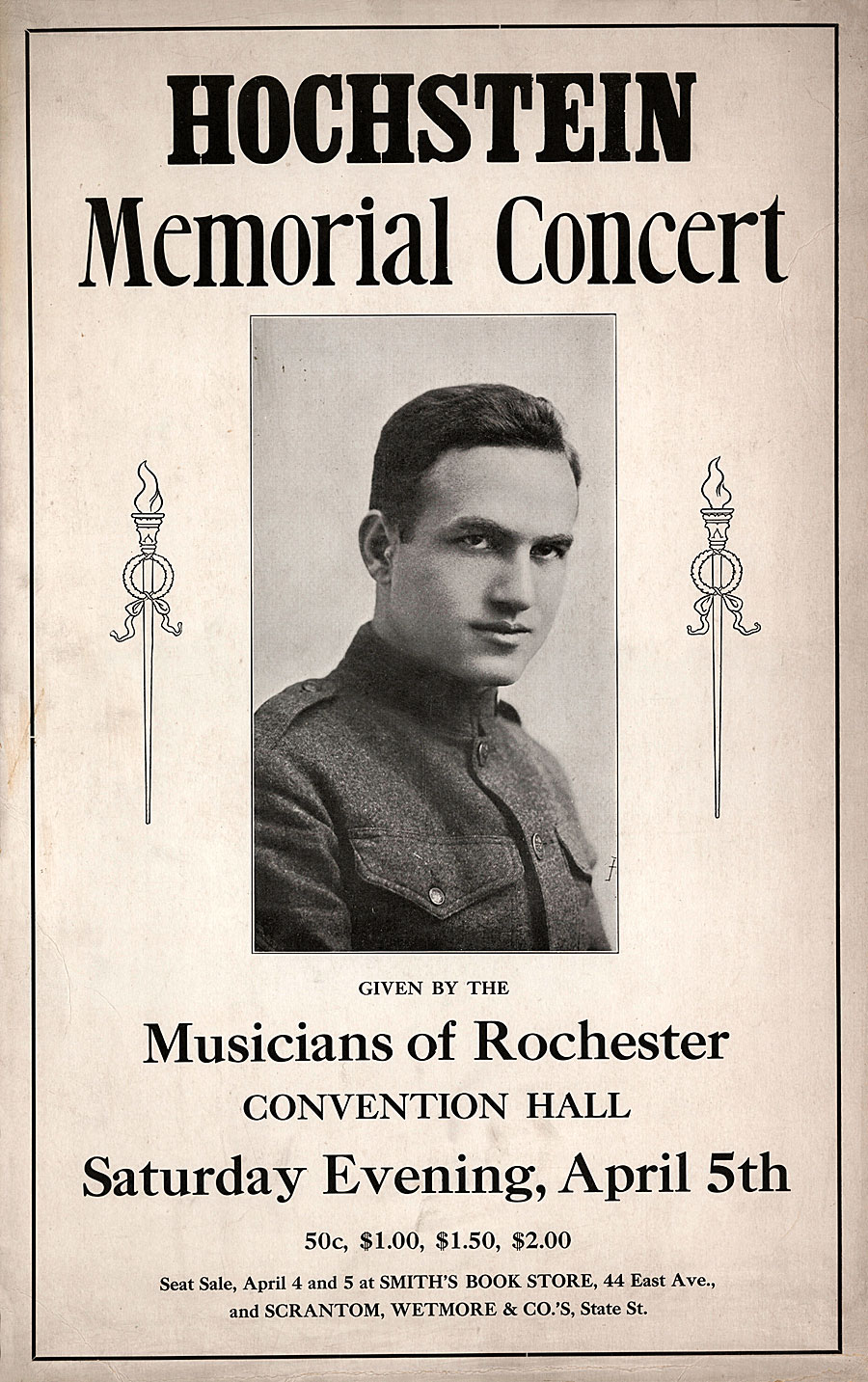
April 5, 1919
Rochester musicians rally together for a David Hochstein Memorial Concert attended by an audience of thousands. Funds raised from the concert become the nucleus of support for a proposed Memorial Music School. Additional monies are contributed by Emily Sibley Watson, George Eastman, and other Rochester patrons.
May 1, 1919
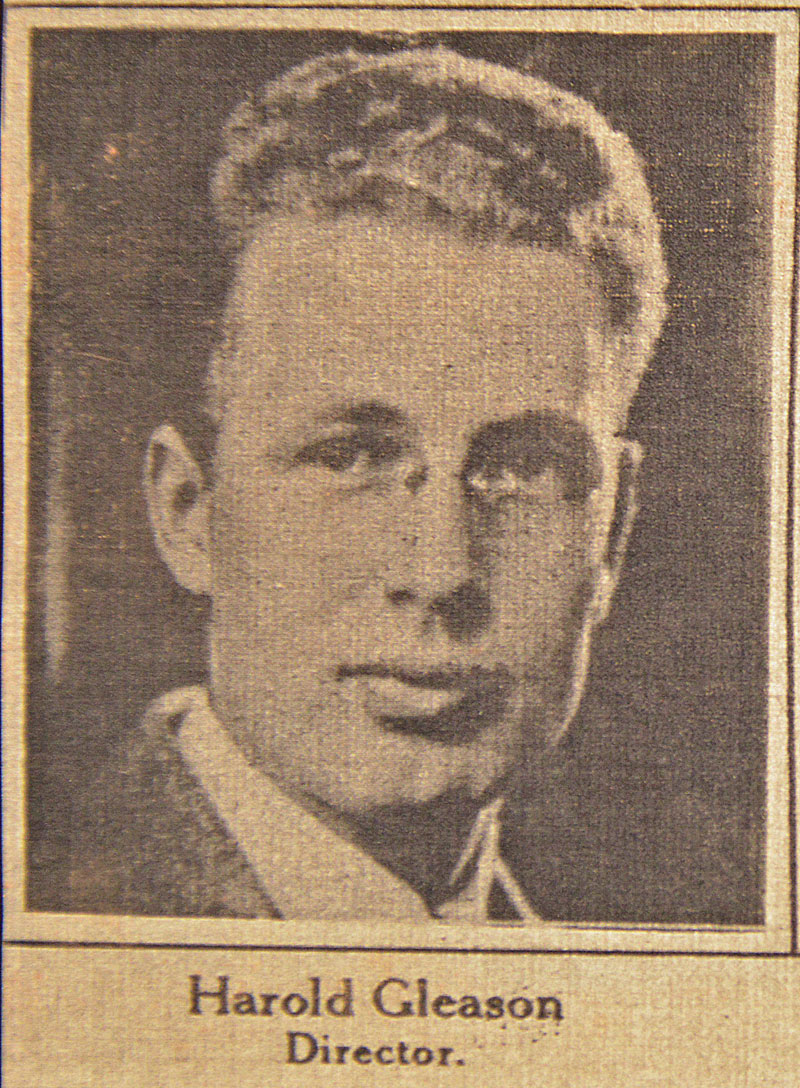
Harold Gleason is named the first Executive Director in 1919. He came to Rochester in May 1919 to become the private organist for George Eastman, founder of Eastman Kodak Company. Eastman was one of David Hochstein’s principal patrons and expressed interest in Gleason’s background as director of Boston Music School Settlement at the time of their first meeting.
January 2, 1920
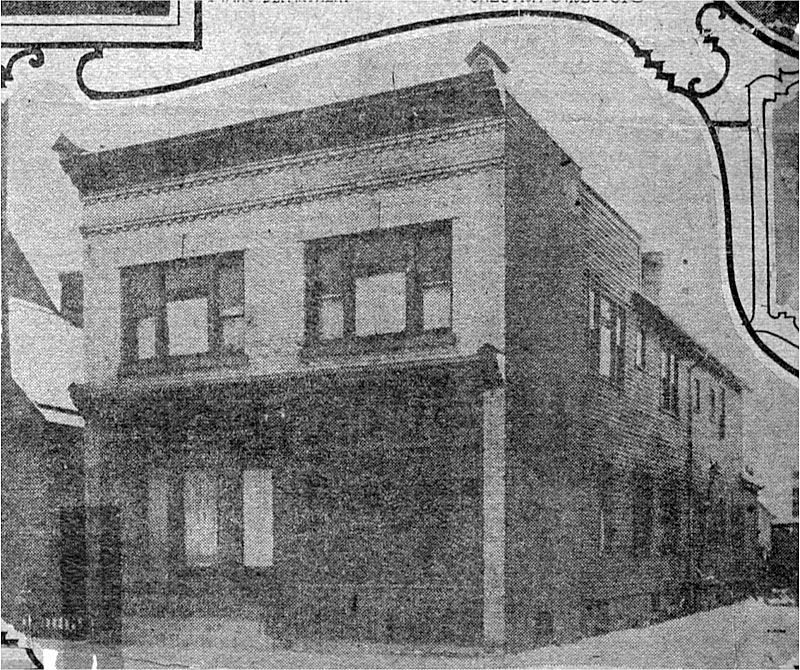
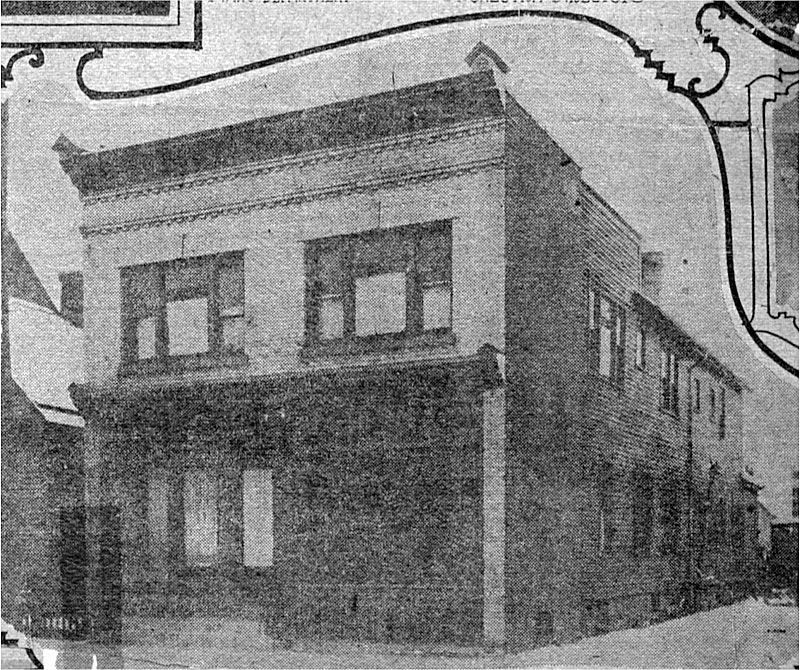
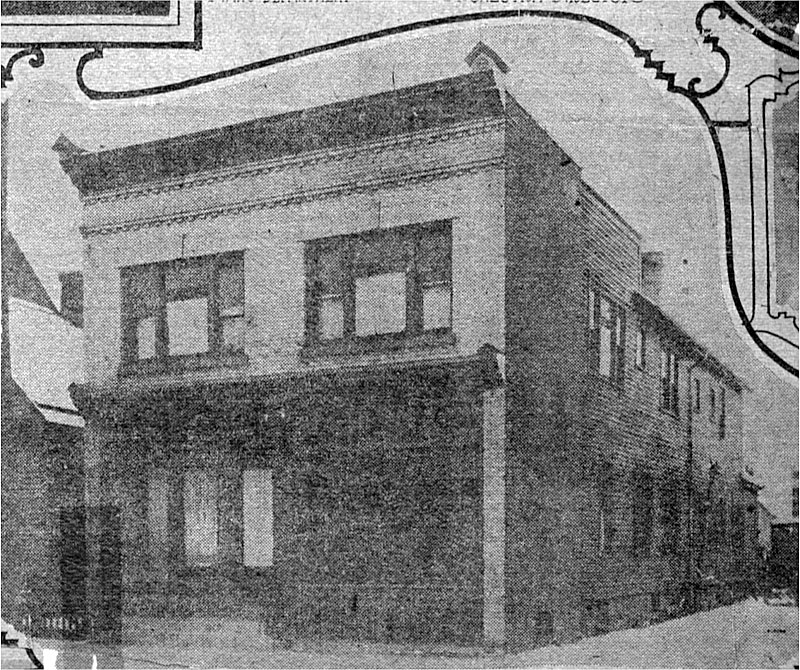
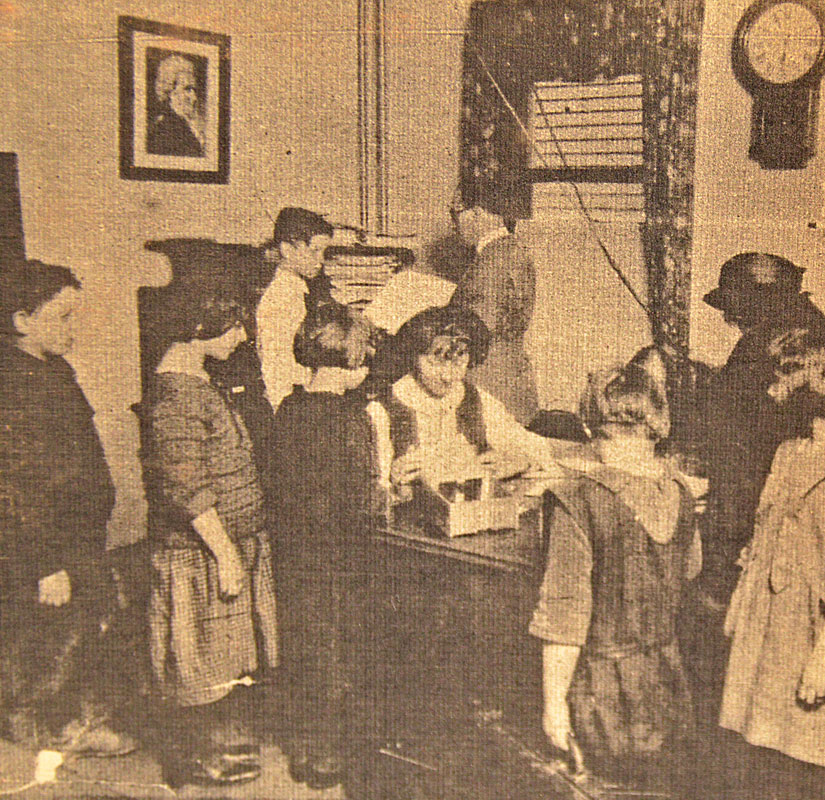
The David Hochstein Music School Settlement is granted a Provisional Charter by the State of New York and opens in the Hochstein family home at 421 Joseph Avenue to 250 eager students on January 2, 1920. Graduated fees for lessons range between 10¢ and 75¢ per hour. The course of instruction included piano, violin, and theory, according to a Democrat and Chronicle news clipping.
January 24, 1920
An article in the Democrat and Chronicle quoted the school’s new mission as “to provide the best musical instruction for children and adults of limited means.”
June 1, 1920
The School had given more than 6,500 individual and class lessons since its inception, and had 330 pupils enrolled as of June 1, 1920. Ten nationalities were represented in the student body: Russian, Italian, Dutch, German, Hungarian, Austrian, Irish, Polish, Roumanian, and American. The School had a staff of 12 teachers and a waiting list of 110 students. There were 10 violins loaned to pupils and 46 “violin outfits” sold at reduced rates.
June 29, 1920
By June 1920, the new music school was ready to spotlight its students in its first annual recital, which was held at the Social Settlement of Rochester (Baden Street) on Tuesday evening, June 29, 1920.
September 3, 1920
The David Hochstein Music School Settlement is granted a Provisional Charter by the State of New York on September 3, 1920.
January 1, 1922
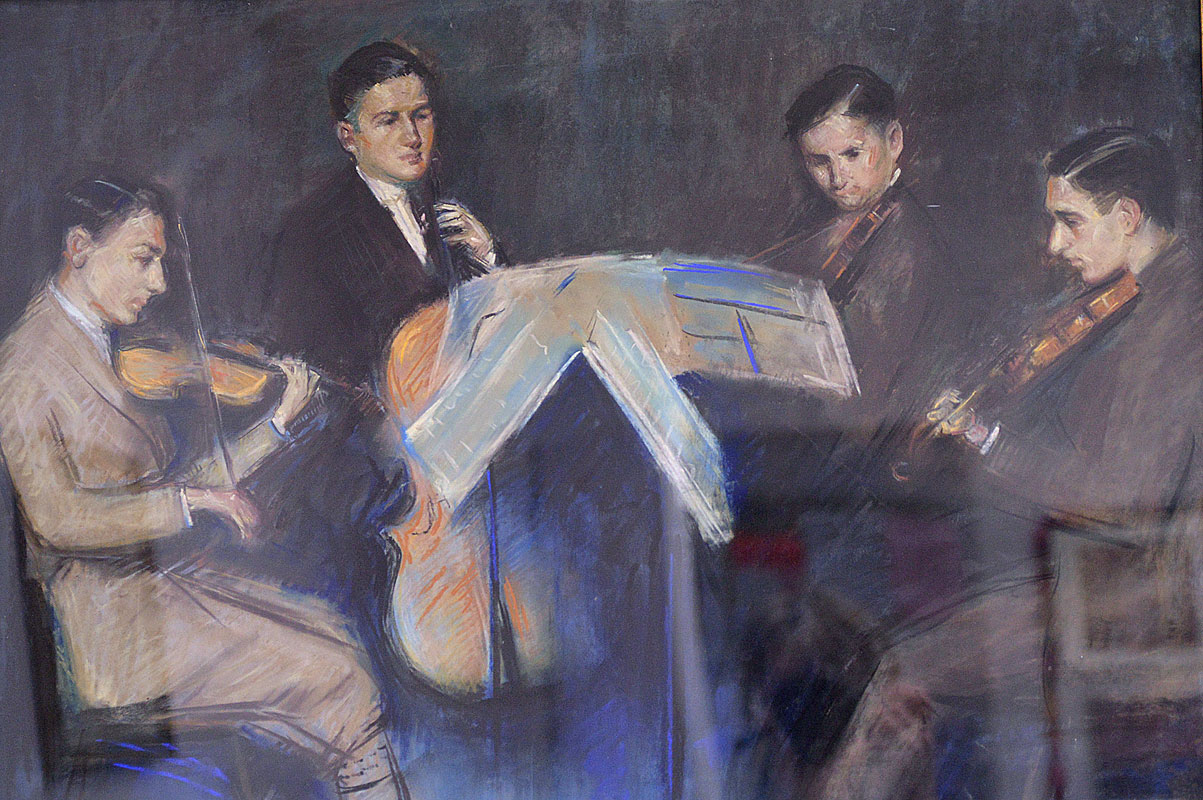
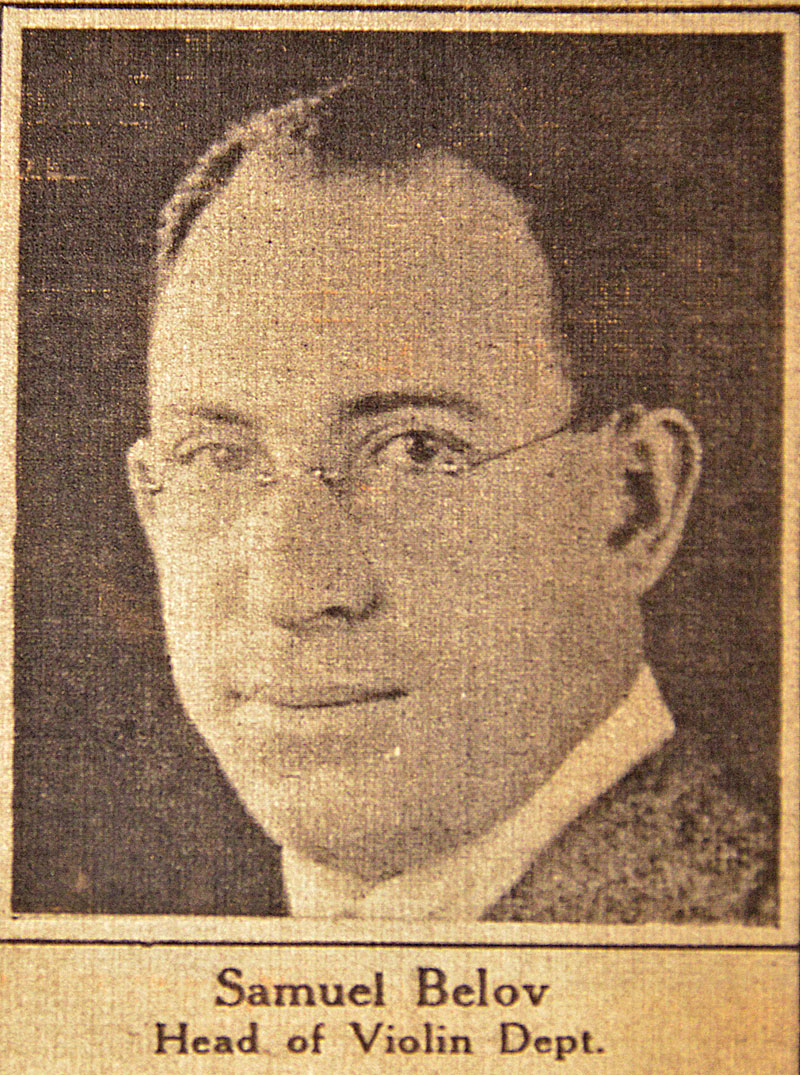
A chamber group dubbed the Hochstein String Quartet was formed of students coached by String Department head Samuel Belov. The Hochstein Quartet gained popularity in the Rochester area and played at venues ranging from the Women’s City Club to the home of George Eastman. Pictured in this painting: Harry Friedman, violin; Louis Melzer, cello; Sam Goldman, viola; Arthur Stillman, violin.
January 1, 1923
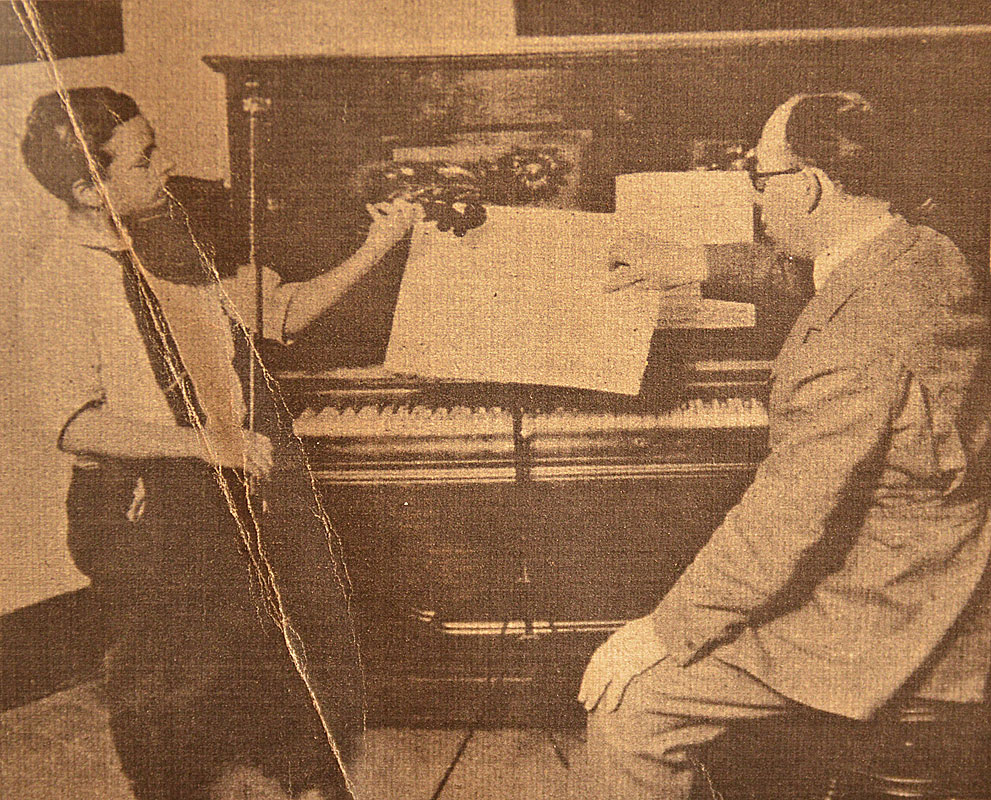
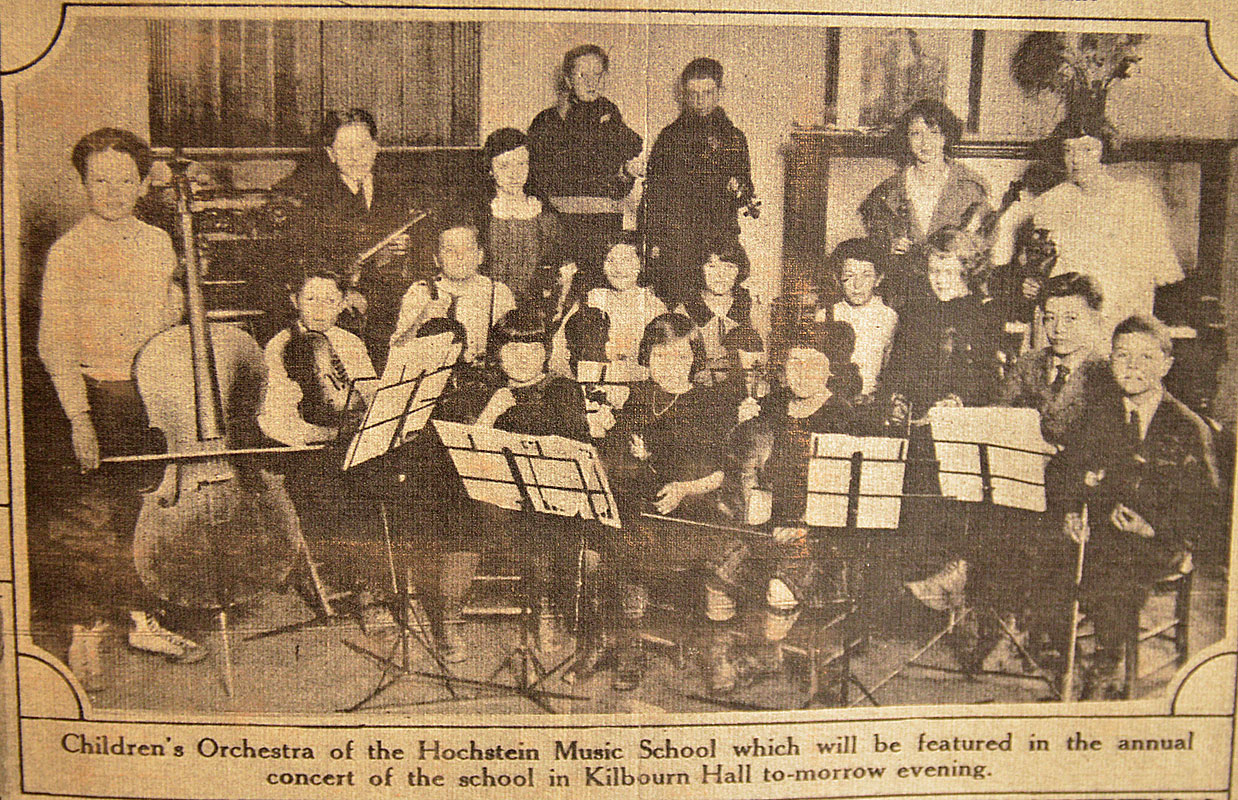
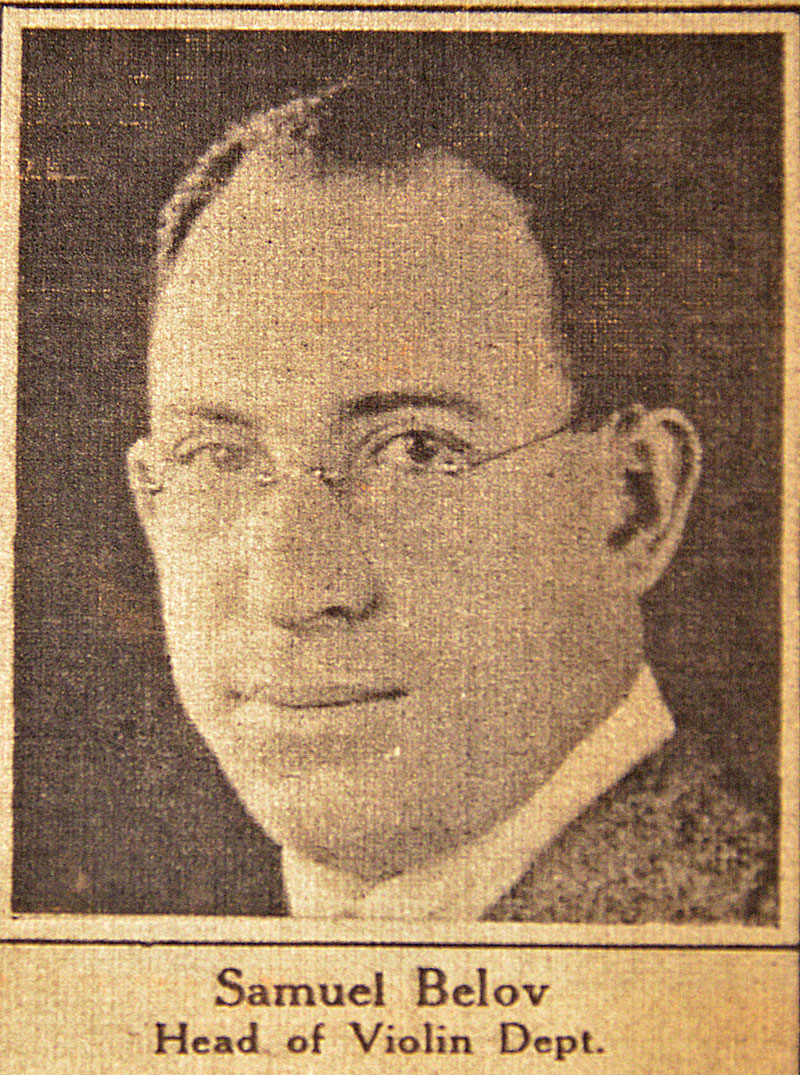
String Department head Samuel Belov oversaw all string activities at Hochstein while also maintaining a teaching position first at the DKG Institute and then subsequently at the new Eastman School, where he was also a member of the Kilbourn Quartet. Belov also added a student string orchestra within the first three years of the school’s existence.
November 1, 1924
By November 1924, a lot had been selected and purchased for $9,060.00, and plans were under way to sell the Joseph Avenue property and build a new school.
February 4, 1928
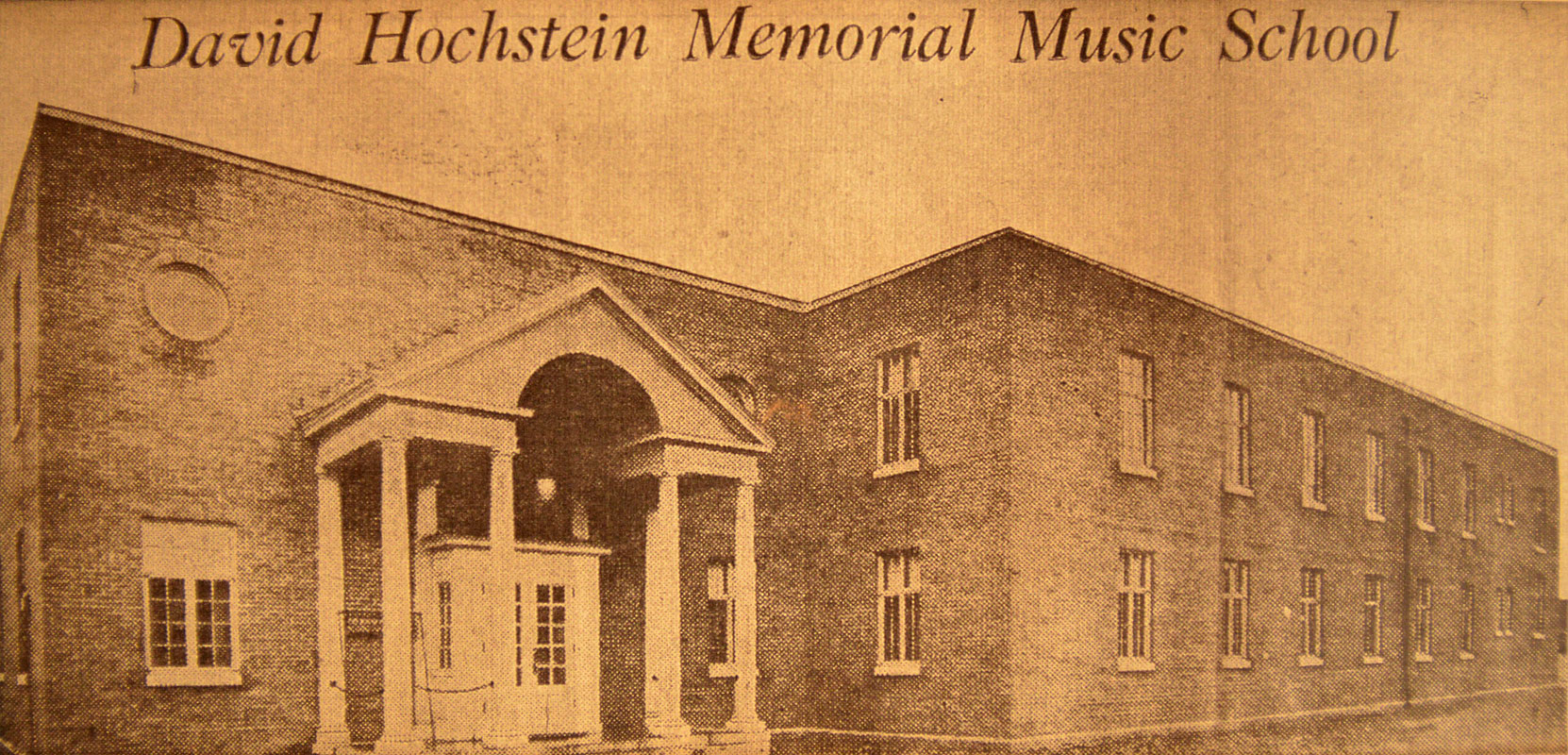
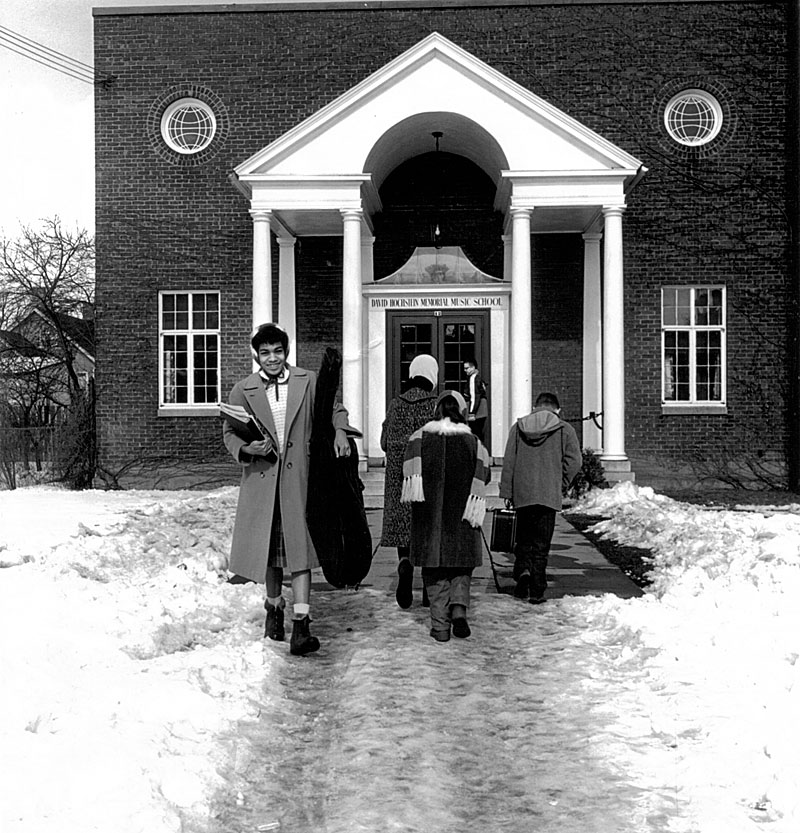
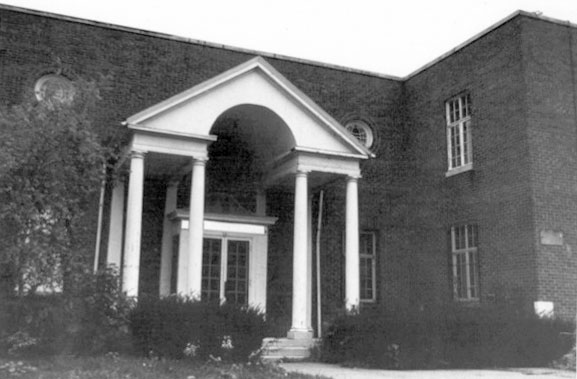
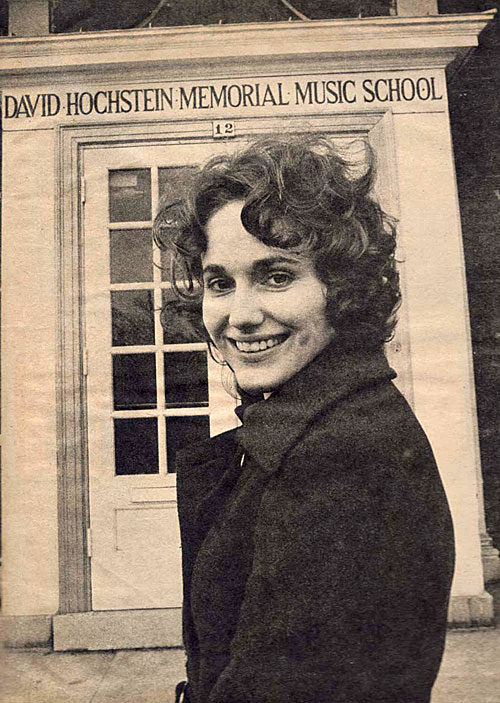
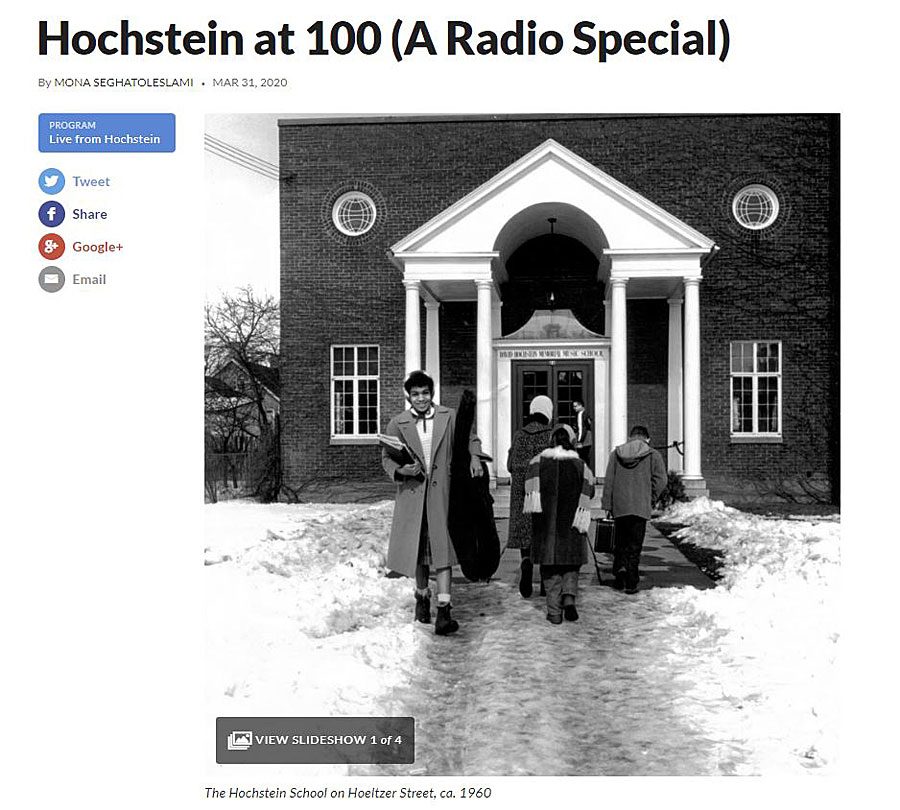
Quickly outgrowing the modest Hochstein home, several interested citizens raise funds and select a site for construction of a new Hochstein School on 12 Hoeltzer Street, where the school thrived for nearly 50 years. (The Hoeltzer Street site was destroyed by fire in 2004.)
February 4, 1928
Pianist Dame Myra Hess donated her services and gave the dedication concert on February 4, 1928.
January 1, 1931
Samuel Belov replaces Harold Gleason as Executive Director (1931-1943).
January 1, 1943
Emanuel Balaban is named Executive Director (1943-44). He was a pianist and freelance conductor who taught at the Eastman School of Music and later at The Juilliard School.
January 1, 1944
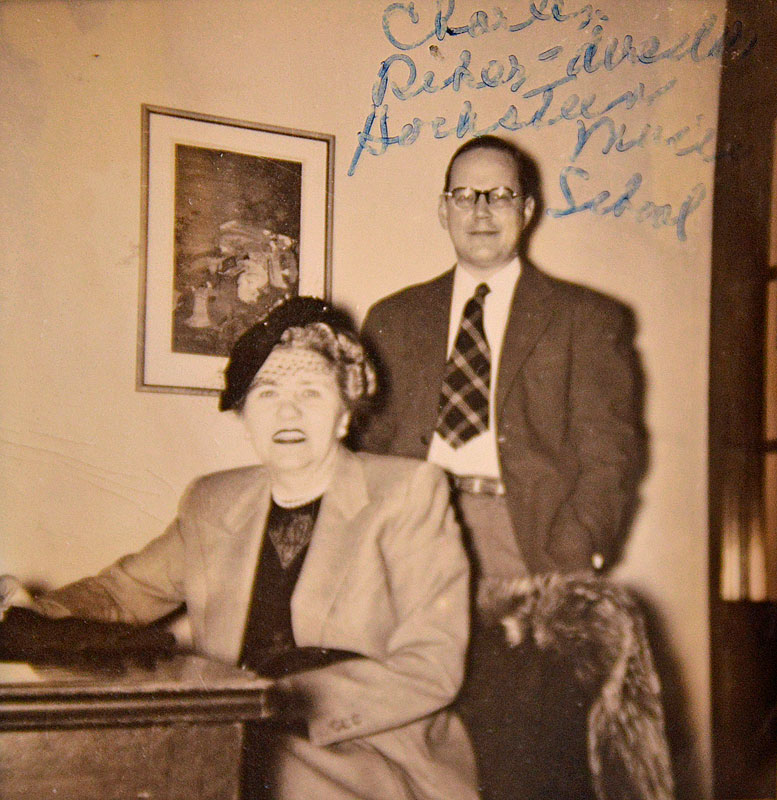
Charles Riker is named Executive Director (1944-1955). A historian and pianist, he also taught humanities at the Eastman School of Music and in 1948 published a short history of the Eastman School.
January 1, 1955
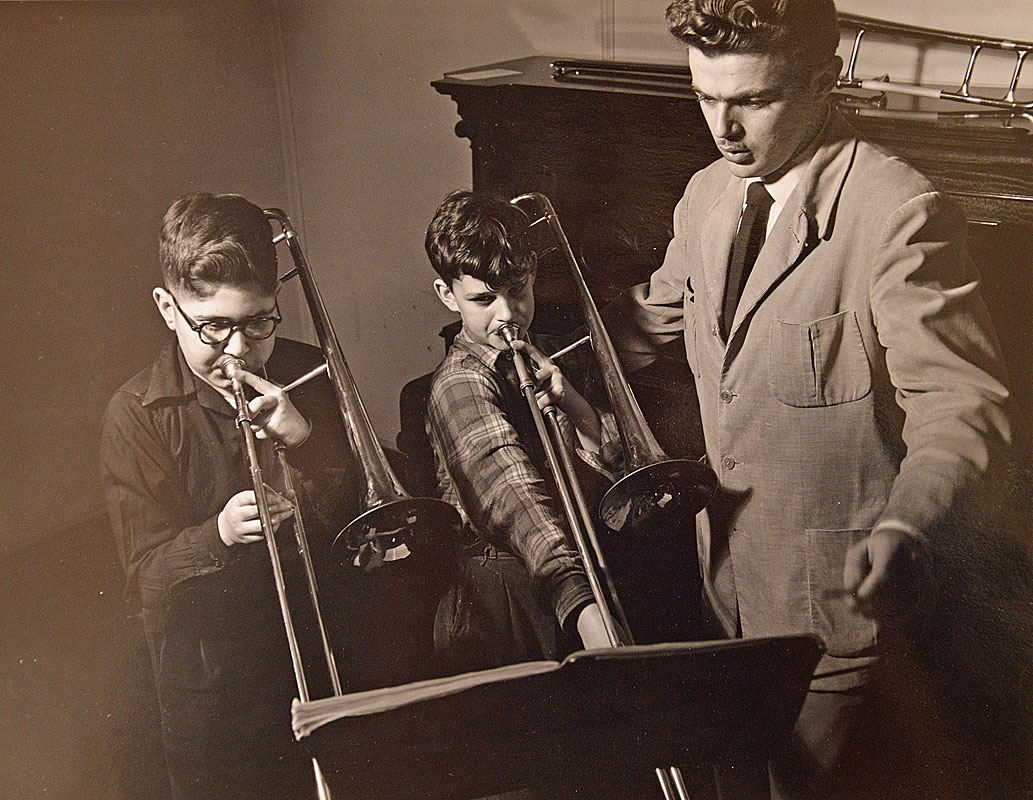
Ralph Bigelow is named Executive Director (1955-1960). A graduate of Eastman in trombone and theory, his professional career evolved into university administration. While at Hochstein, he also served as registrar at Eastman. By June 1960, Bigelow had made the decision to leave both his Hochstein and Eastman School posts to accept the position of registrar at Furman University.
October 12, 1959
Board President Hilda Taylor wrote a letter to Eastman School Director Howard Hanson on October 12, 1959, summarizing a crisis of mission: “Our investigations to date indicate that certain fundamental changes have taken place since the founding of the School … We note that the families presently being served by the School are not necessarily underprivileged, at least in what we believe was the connotation of the founders.”
October 29, 1959
Howard Hanson responded: “The importance of the contribution of the Hochstein School to music in Rochester over the years has been so great that it would seem a shame to see that contribution discontinued. Perhaps we can find a philosophy which will adapt the organization of the school to the new conditions which it now faces.”
January 1, 1960
Board President Hilda Taylor received a letter from Eastman Director Howard Hanson saying that Eastman would discontinue its restricted subsidy of teacher salaries, instead substituting a direct, unrestricted annual contribution. This was an acknowledgement of the Eastman School’s (and Hanson’s) support for the continuation of Hochstein’s programs.
March 1, 1960
Executive Director Ralph Bigelow offered possible ideas for program expansion, such as establishing programs for adults as well as children. He also suggested that the School hire a full-time director (his position was only part-time), reduce the size of the Board, and work to keep Hochstein’s progress always in the public eye. The Board moved quickly to adopt Bigelow’s plan of action to expand the School and seek out a full-time director.
July 5, 1960
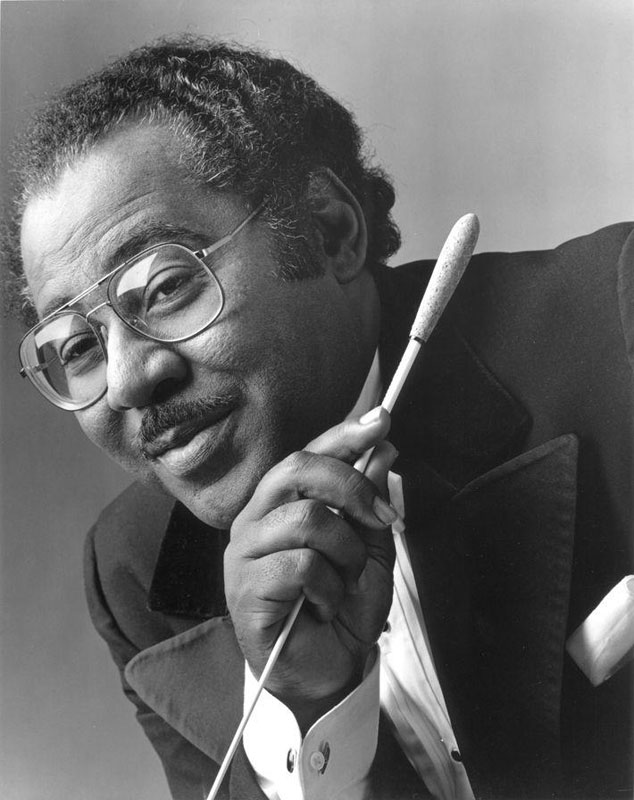
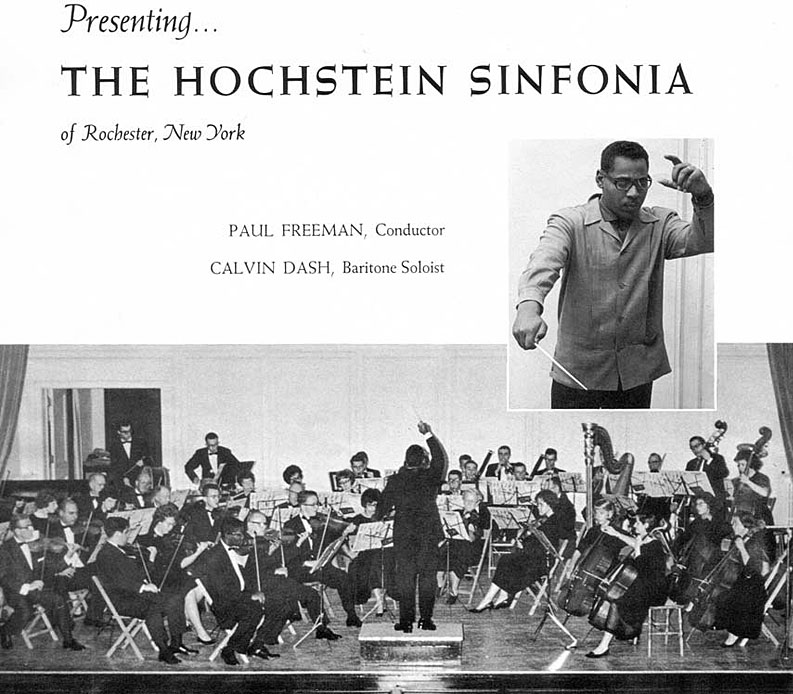
Paul Freeman is named Executive Director on July 5, 1960. Born in Richmond, Virginia, Maestro Paul Freeman made a global impact with his symphonic direction. Freeman attended the Eastman School of Music, where he earned his B.A., M.A. and Ph.D. degrees, with his principal instruments being the clarinet and the cello. He received a Fulbright Scholarship for two years of study at the Hochschule für Musik in Berlin. He began his conducting career with the Opera Theater of Rochester, New York, and later founded the Chicago Sinfonietta. He died in 2015.
January 1, 1961
One significant professional milestone achieved early on during Freeman’s first year at Hochstein was the School’s membership in the National Guild of Community Schools of the Arts (now the National Guild for Community Arts Education) in 1961. Not much is known about what precipitated the School’s membership, but it was certainly due in part to Freeman’s efforts, as the director was already listed as a presenter at the Guild Seminar, “Practical Considerations of the Administration of a Community Music School.”
April 1, 1961
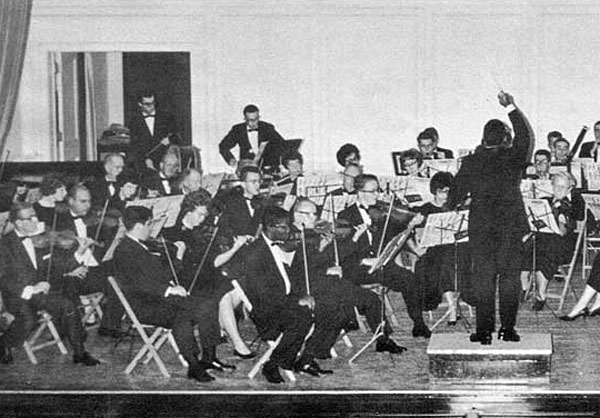
Executive Director Paul Freeman moved forward with a number of new initiatives to make Hochstein the musical center he had proposed. In April 1961, he inaugurated a Spring Festival of Music. This three-day event was launched with a concert by the Hochstein Sinfonia featuring flutist Joseph Mariano and harpist Eileen Malone as soloists. Mariano and Malone, both Eastman faculty members, were principal chairs in the Rochester Philharmonic Orchestra.
April 1, 1963
Paul Freeman took the Hochstein Sinfonia on tour in the Washington, DC area in the spring of 1963. The tour, which also spotlighted baritone Calvin Dash, included performances at Howard University, Virginia State College, Virginia Union University, and several public schools in the region.
January 1, 1964
Hochstein becomes a member agency of the Community Chest, now the United Way of Greater Rochester. United Way funds were specifically designated to support financial assistance for both our Music & Dance and, later, Music Therapy Programs.
January 1, 1966
Alice Conway is named Executive Director (1966-68). A Rochester-area native, Conway held Bachelor’s and Master’s degrees in Music Education from the Eastman School of Music, where her primary instrument was harp.
April 1, 1967
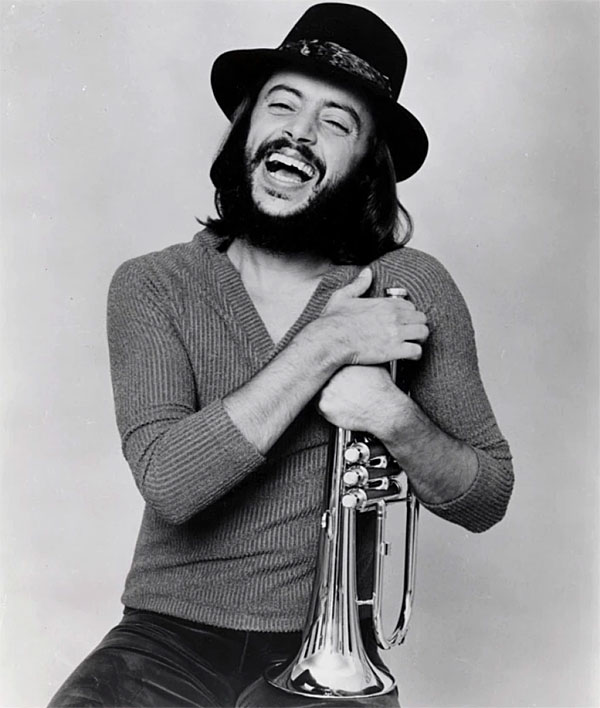
The popular Spring Festival in 1967 was slated to include a lecture on jazz and an accompanying concert presented by Chuck Mangione. According to an article in the Democrat and Chronicle, his band included Joe Romano, Louis McIntosh, and Steve Gadd. “Since the demand for this type of activity has been so great over the years, we felt that Hochstein should take the initiative in offering this form of music in a disciplined manner,” said Hochstein Executive Director Alice Conway.
June 20, 1968
On June 20, 1968, the Hochstein Board formally accepted the City of Rochester’s request for the Hochstein School to act as a “delegate agency for the Summer Youth Opportunities Arts Festival Instructional Program.” The city arts program was part of a larger effort to create jobs and educational opportunities for city youth at a time of both political and social unrest.
July 1, 1968
“Free Family Fun” concert programs in the Summer of 1968 included outdoor events at various playgrounds, outdoor plazas, and school grounds; as well as performances by local performers (including tenor James Wagner of Opera Theatre of Rochester and Chuck Mangione with a city-county jazz ensemble), and nationally known performers such as Stevie Wonder, Smokey Robinson, Lionel Hampton, Clark Terry, and Duke Ellington.
September 1, 1968
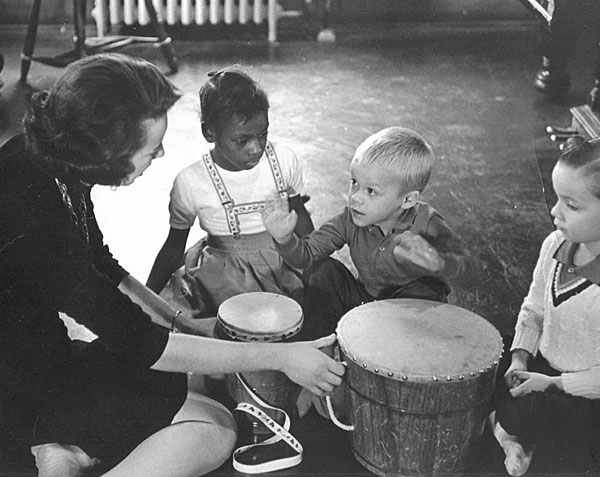
Executive Director Alice Conway reported in Fall 1968 that 16 social agencies had students represented in the summer arts program; approx. 2,400 students in all. The preschool programs actually took place at the settlement houses, and both an Orff specialist and a Creative Dance specialist worked with classes of 15 students for one hour per week.
October 1, 1968
Allen McHose is named Interim Director (1968-70). McHose was a theory professor at the Eastman School of Music and acted as Howard Hanson’s administrative assistant from 1941 to 1953. He was also director of the Eastman summer school programs from 1953, and the Associate Dean of Eastman from 1962-67.
September 1, 1970
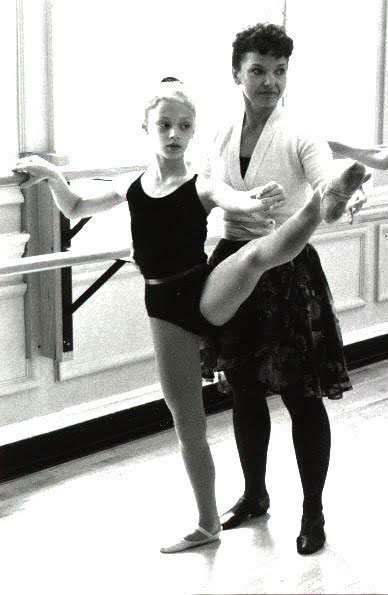
As of Fall 1970, Hochstein’s ballet program had 18 students and two new classes were being added: one class for adults, and another “akin to the Suzuki violin approach” that had mothers and daughters taking class together.
September 1, 1970
Paul Burgett is named Executive Director (1970-71). Burgett earned three degrees – bachelor’s, master’s, and a doctorate in music education in 1976—at Eastman. After working at Hochstein, as a music teacher in the Greece School District, and as an assistant professor of music at Nazareth College, Burgett returned to Eastman in 1981 as its dean of students and went on to a long career in administration at the University of Rochester until his death in 2018.
October 1, 1970
Executive Director Paul Burgett reported in October 1970 that the Orff program (named for the Orff Schulwerk teaching method) had grown “in quality and size,” and offered a structured program for children ages four through ten. The School had engaged two new, experienced teachers.
September 1, 1971
Helen Tuntland Jackson is named Executive Director (1971-84). From Des Moines, Iowa, she studied music education, then completed a Master of Music in Organ Performance and Literature at the Eastman School in 1970. After working for one year as a private organ instructor in Houston, she returned to Rochester to assume the position of Director at Hochstein. She is married to Isaiah Jackson, former associate conductor of the Rochester Philharmonic Orchestra.
October 1, 1971
A new jazz seminar is announced in October 1971, in which students would listen to recordings of great jazz artists, arrange their own music, study theory and improvisation, and learn about the history and development of jazz in the USA. The class was taught by professional jazz musicians Luther Henderson, Charles VanBuren, Allen Murphy, and Jeff Tkazyik (now Jeff Tyzik, conductor for the RPO Pops).
November 1, 1971
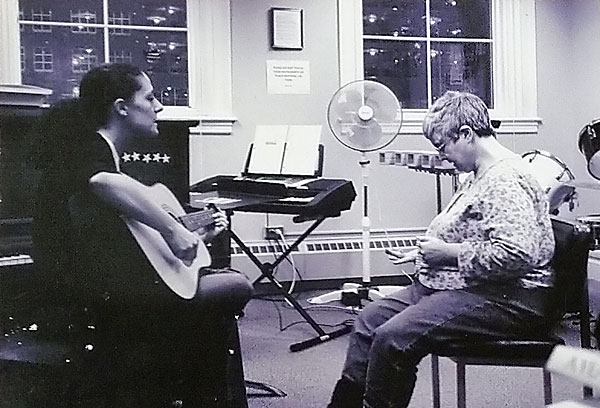
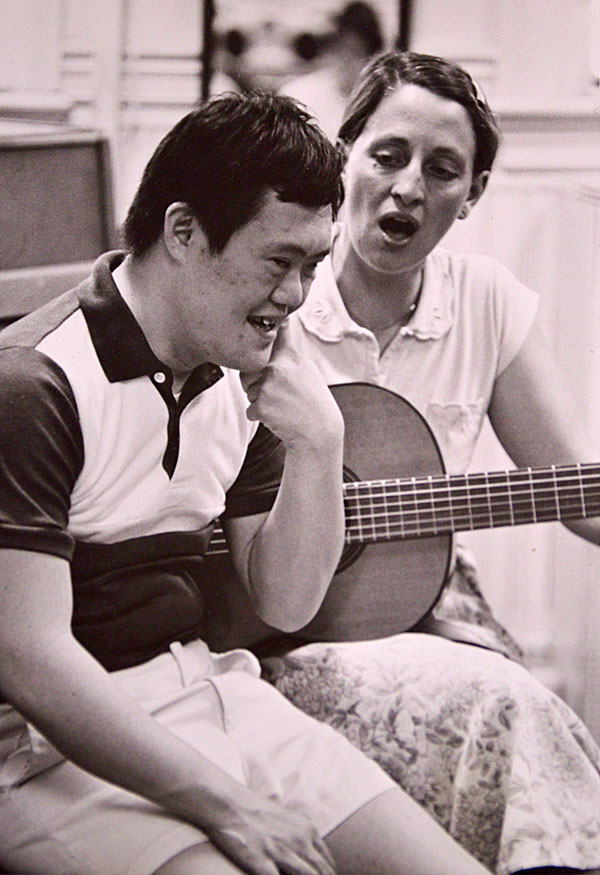
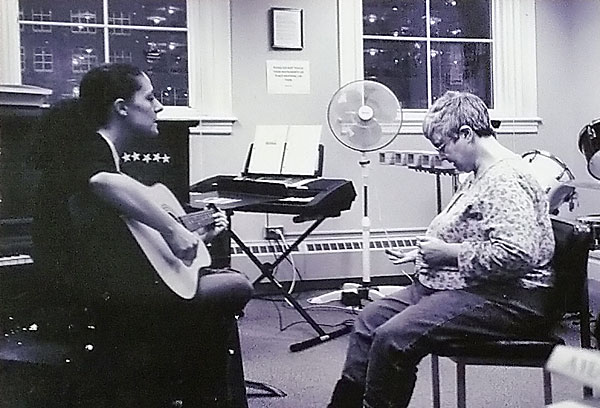
A new pilot program, which would “extend services and facilities of the School to handicapped children” (per Helen Tuntland board report), marks the beginnings of a music therapy program.
December 1, 1972
The Rochester Philharmonic Orchestra had its first performance at the Hoeltzer Street location of the Hochstein School in December 1972.
January 1, 1974
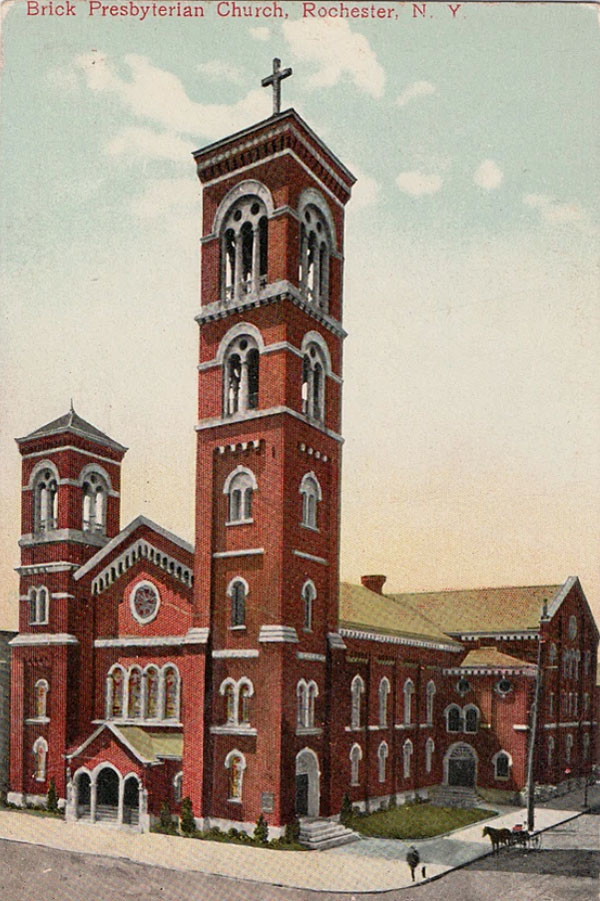
In 1974, three of the City’s Presbyterian churches, including Central Presbyterian, merged to form the congregation of the Downtown United Presbyterian Church (also called Brick Church and located on North Fitzhugh Street).
November 1, 1974
Helen Tuntland was elected to the Board of Directors of the National Guild, as Secretary, in November 1974.
January 1, 1975
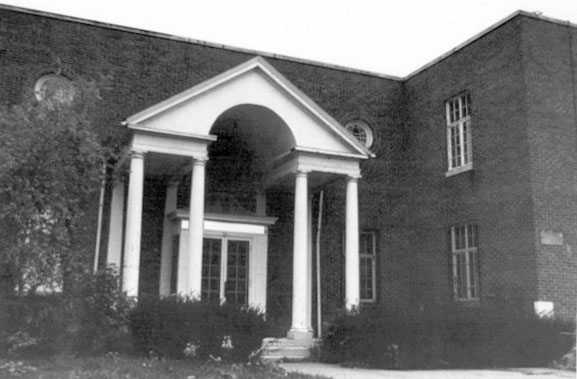
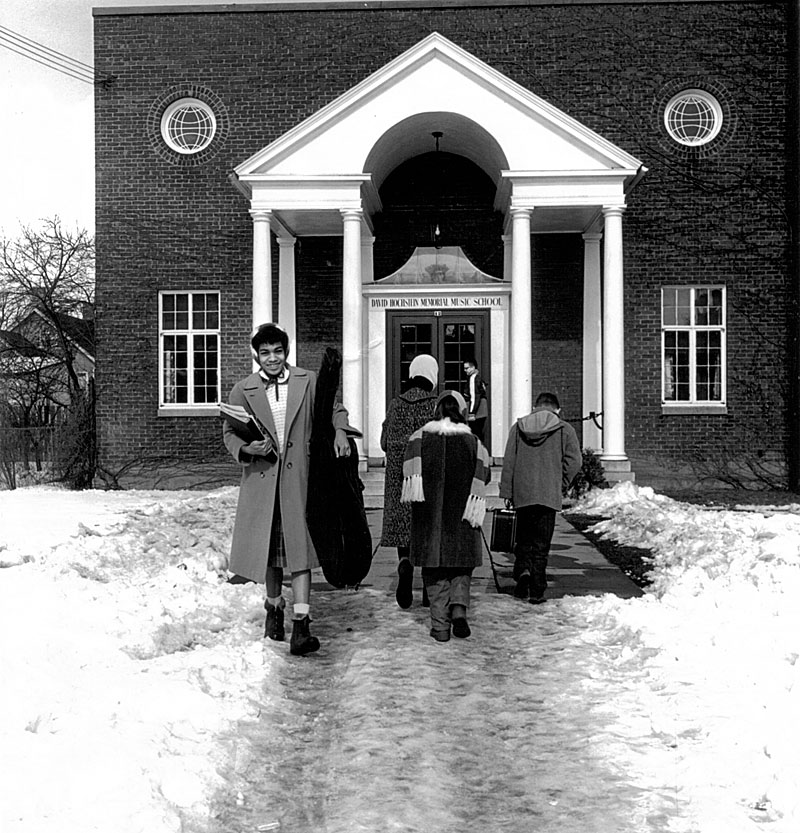
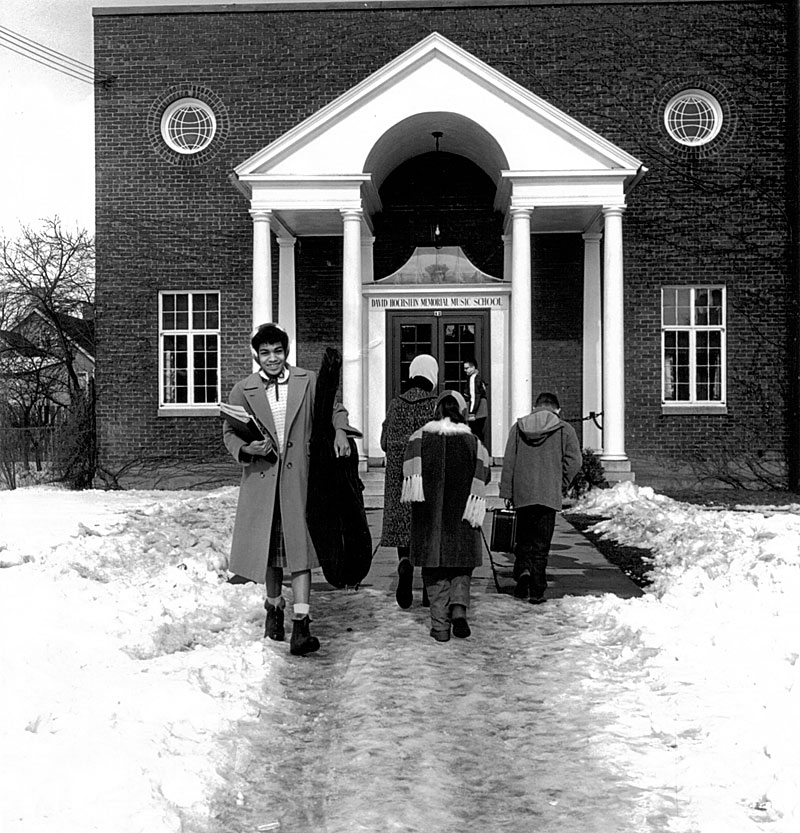
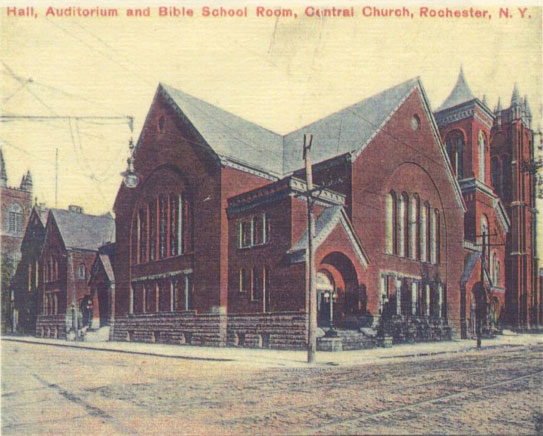
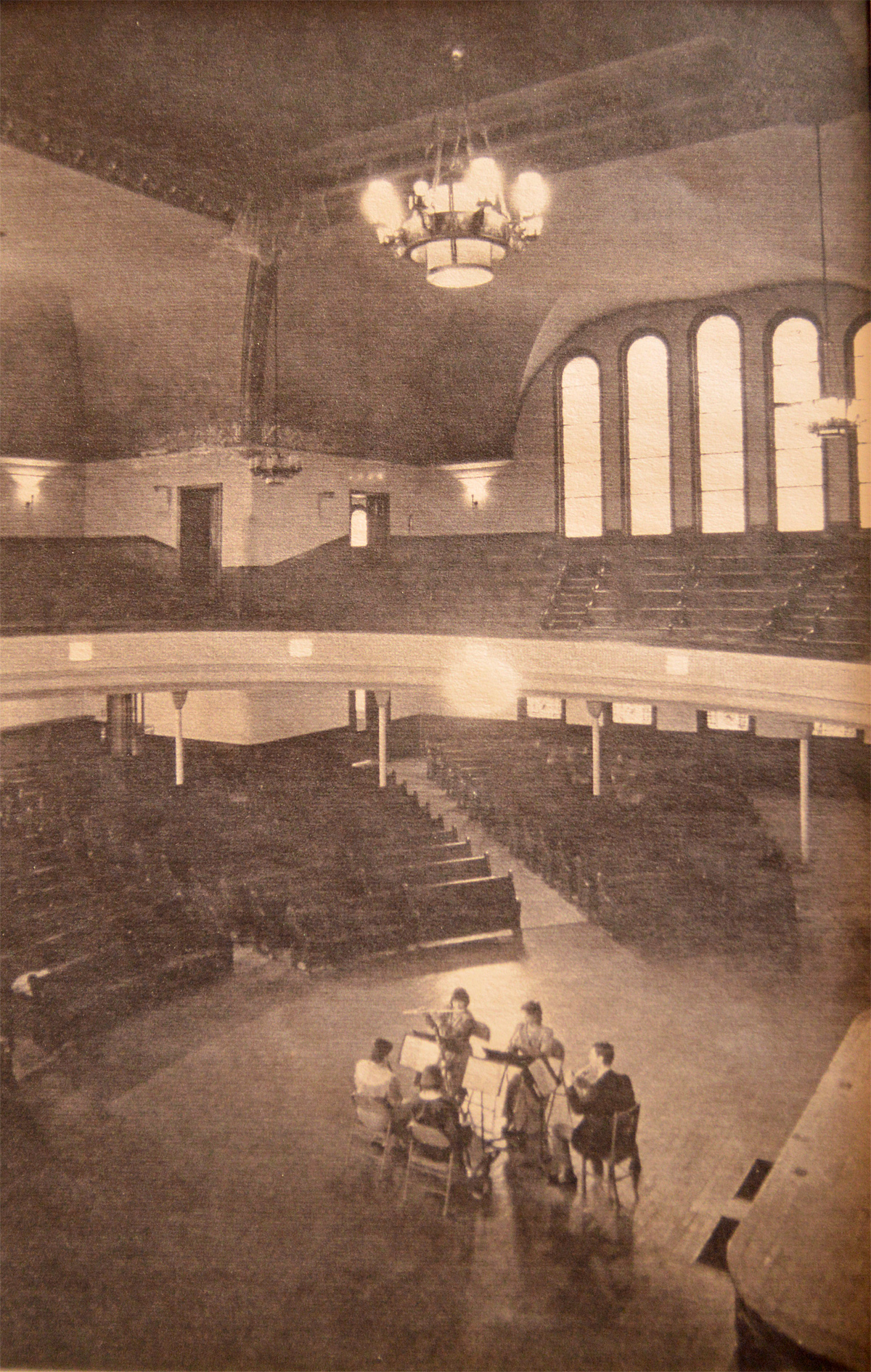
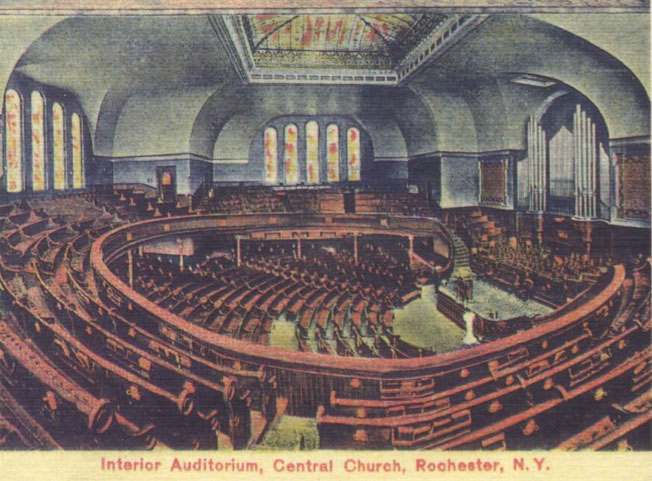
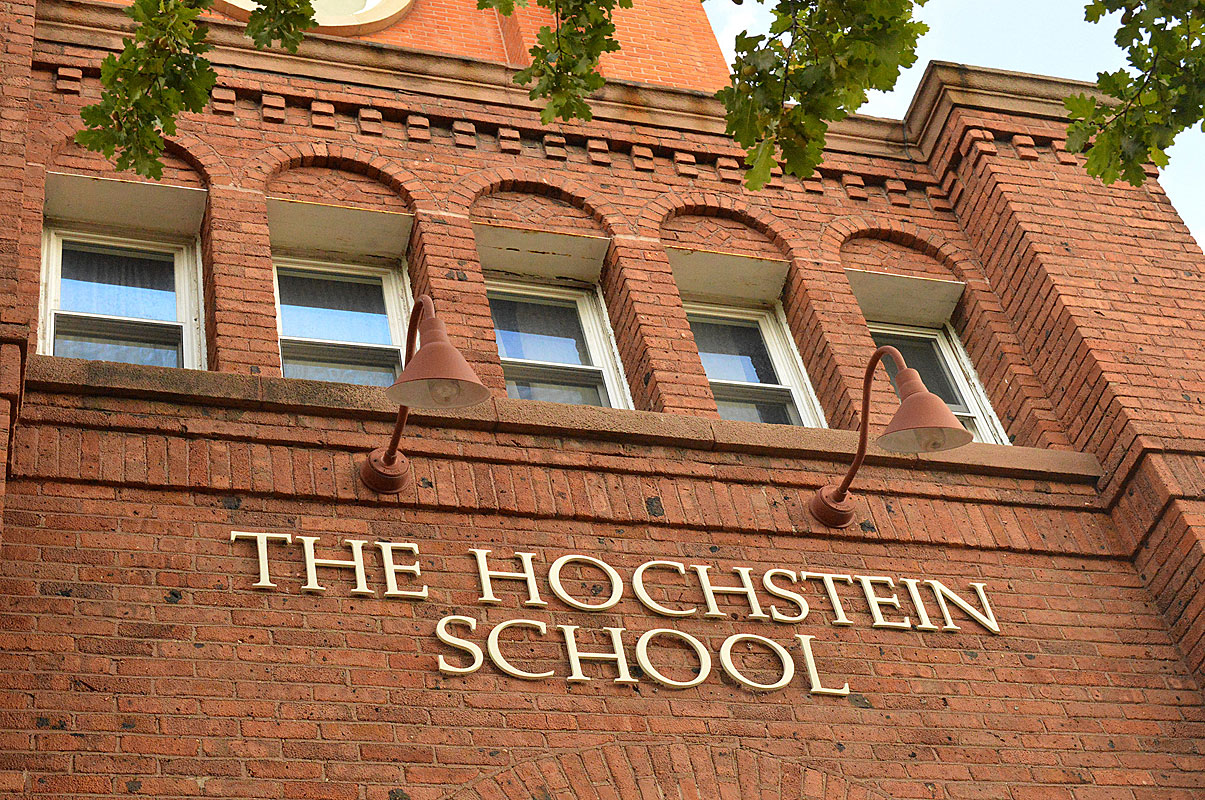
Again bursting at the seams, Hochstein moves to its current location in the former Central Presbyterian Church on Plymouth Avenue in 1975. With help from the Presbyterian Church, the United Way, and the Rochester Department of Community Development, $180,000 was contributed to repair the exterior of the building. An additional community fund drive raised $35,000 for minor remodeling of the interior before the school moved in.
September 1, 1975
Hochstein’s music therapy program started in 1975 with just two clients. “Our idea was to provide special needs kids with a fun and therapeutic outlet for their talent, interest, and artistic needs,” says former Executive Director Helen Tuntland Jackson.
November 12, 1975
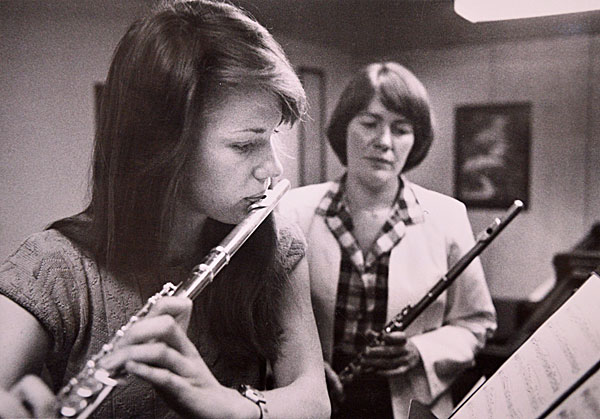
The noontime concert series began on November 12, 1975, when flutist Glennda Dove and pianist Joseph Werner gave a concert program entitled, “Musique de Paris” – which included the Fauré Fantasy, the Poulenc Sonata, and the Dutilleux Sonatine – on the second floor of the Central Presbyterian Church facility. Dove is a graduate of the Eastman School of Music and joined the Hochstein in 1974. Werner, also an Eastman graduate, was not at that point a member of the Hochstein faculty, but he was the pianist with the Rochester Philharmonic Orchestra.
January 1, 1976
In 1976, Hochstein becomes the first non-degree-granting community school in the country to be awarded accreditation by the prestigious National Association of Schools of Music. The School remains one of a small number of non-degree-granting institutional members of NASM.
September 1, 1976
Hochstein and Nazareth College developed a music therapy program using faculty cooperatively hired by Hochstein and Nazareth, whereby students enrolled in the Nazareth College Music Therapy Program would be able to do their internship at Hochstein.
October 18, 1976
“The Noontime Concerts are impressive, both in terms of the program offered and attendance by people who work in the area.” (From a NASM Visitation Report, October 18, 1976, about the “Downtown Musical Noontime” concerts coordinated by Robert James, which were a precursor to Live from Hochstein.)
January 1, 1977
In January 1977, Hochstein reached another milestone when its Downtown Musical Noontime concerts began to be broadcast on WXXI-FM, the primary classical music station in the Rochester area. The concerts included live interviews of performers conducted by popular WXXI announcer Simon Pontin.
July 1, 1977
Hochstein continued its noontime series outdoors in Summer 1977 to include twelve concerts in both Genesee Crossroads Park and a new venue, Manhattan Square Park. These concerts were funded by the City of Rochester and Sybron Corporation.
October 1, 1977
Hochstein continued to make advances in enrollment, with 756 private lessons being taught weekly as of October 1977. Hochstein now offered three new “divisions” or tracks of study at the Hochstein School: General Music; Certificate Division, for students who were interested in pre-professional training and/or careers in music; and Extension Division, for more in-depth work.
January 1, 1978
In 1978, Hochstein purchased the Plymouth Avenue building for $1, considered to be an appropriate fee in light of the long tradition of the importance of music in that house of worship. Further renovations to the lower level studios were accomplished in the 1980s, and major capital campaigns followed, the first to renovate the entire educational facility, the second to renovate the “auditorium,” now known as the Performance Hall at Hochstein.
September 1, 1978
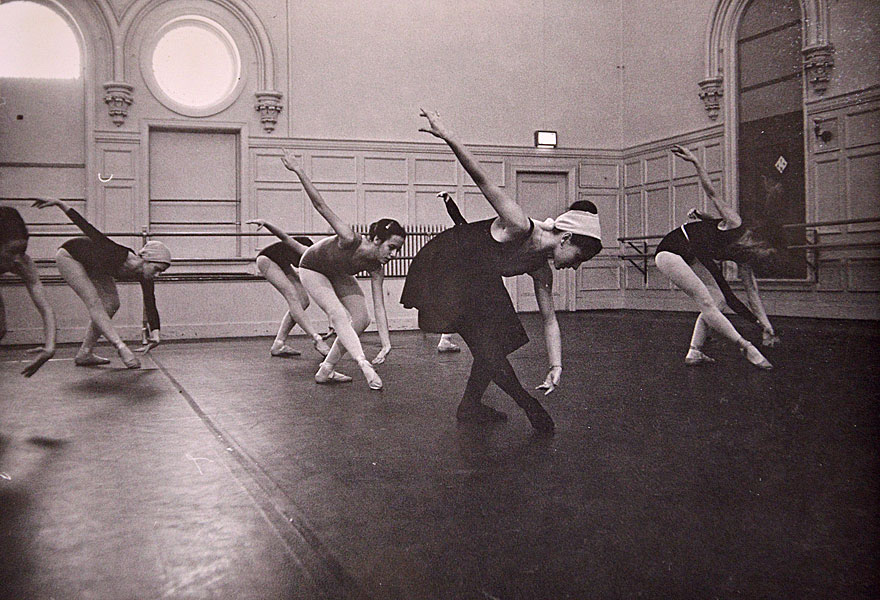
By Fall 1978, remodeling and renovation of dance studios and dressing rooms financed by a grant from the Gleason Memorial Fund was completed, and the dance program was expanded as a result. In addition to core classical ballet, modern dance based on techniques of Martha Graham and Afro-Caribbean dance were offered.
September 1, 1979
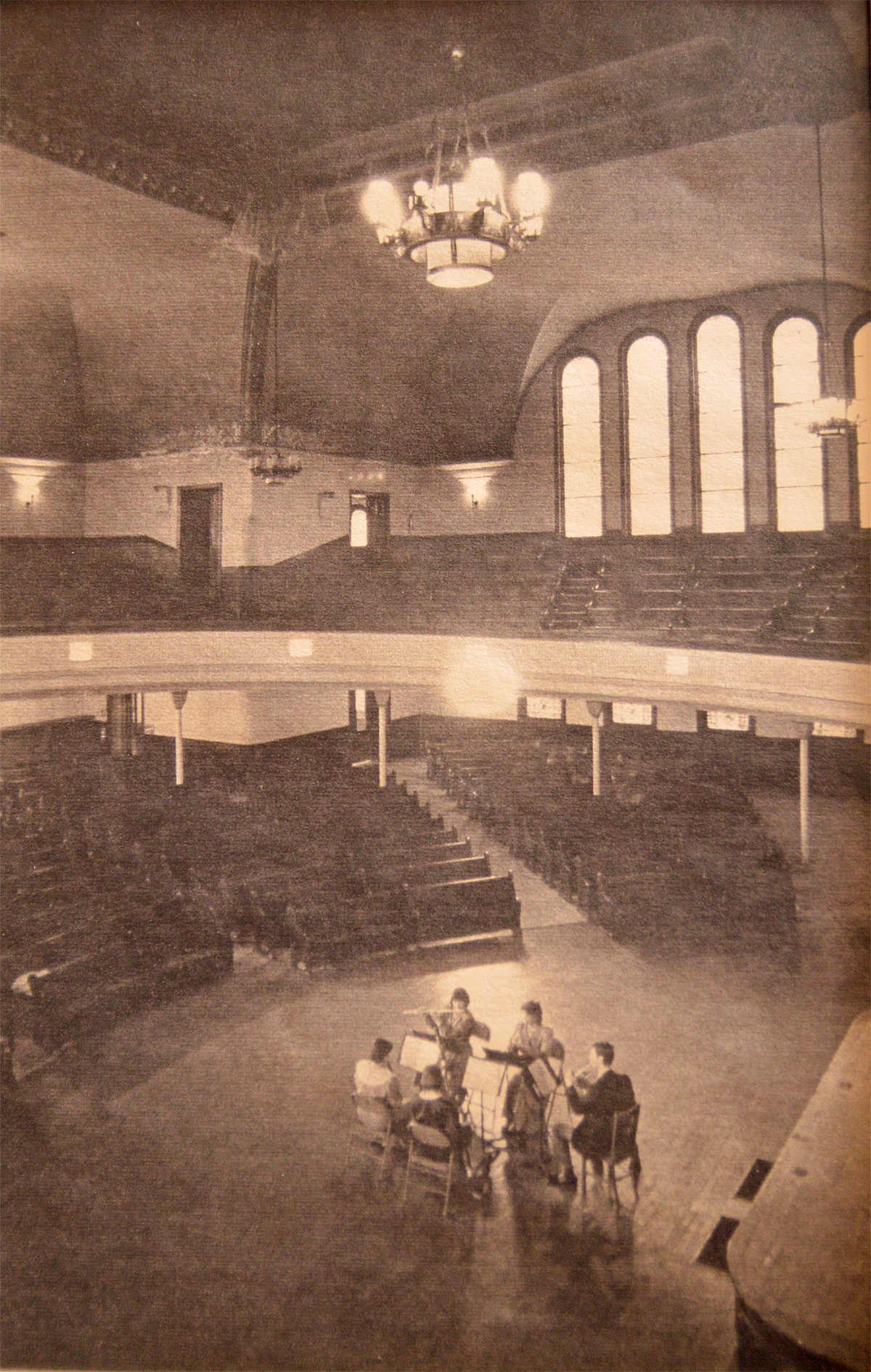
An exciting collaboration was a series of two “Tiny Tots” concerts with the Rochester Philharmonic performing at the Hochstein School in September and October 1979. Both concerts, underwritten jointly by the RPO and the Hochstein School, sold out the 600-seat auditorium (Executive Director’s Report, 9/25/1979). These concerts provided germination for the RPO orKIDStra concerts of today.
June 28, 1981
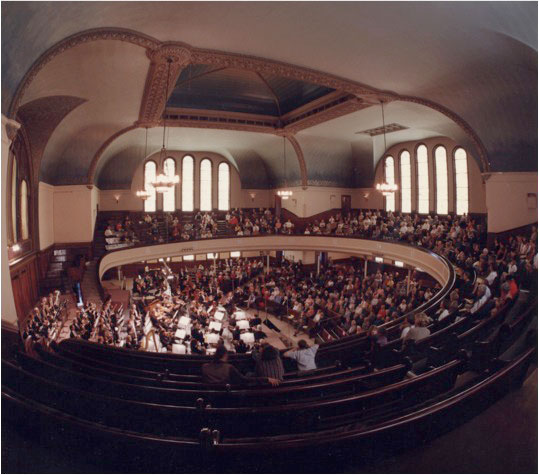
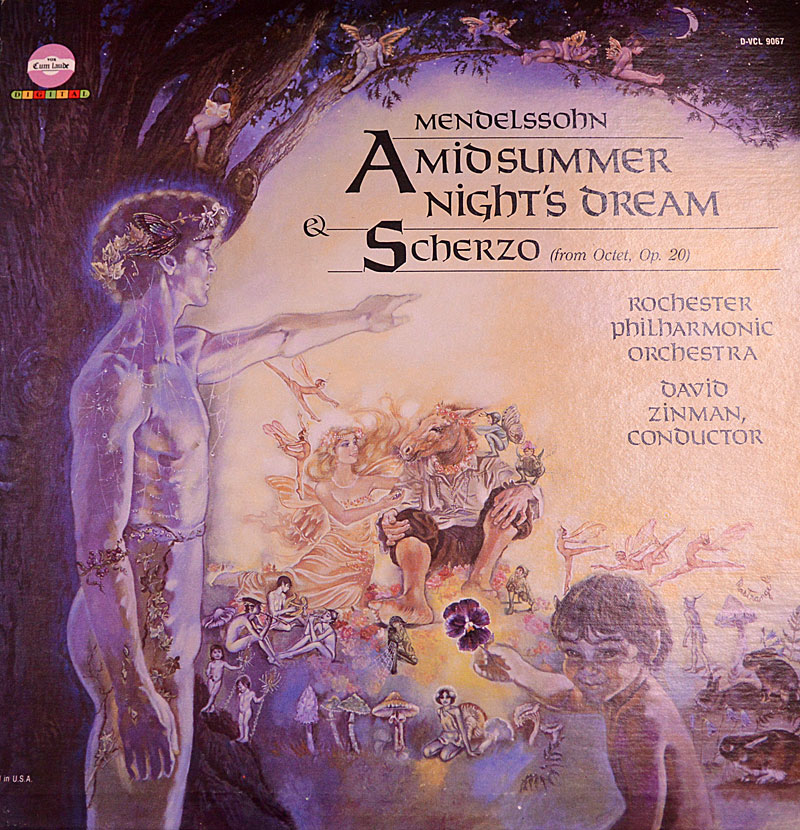
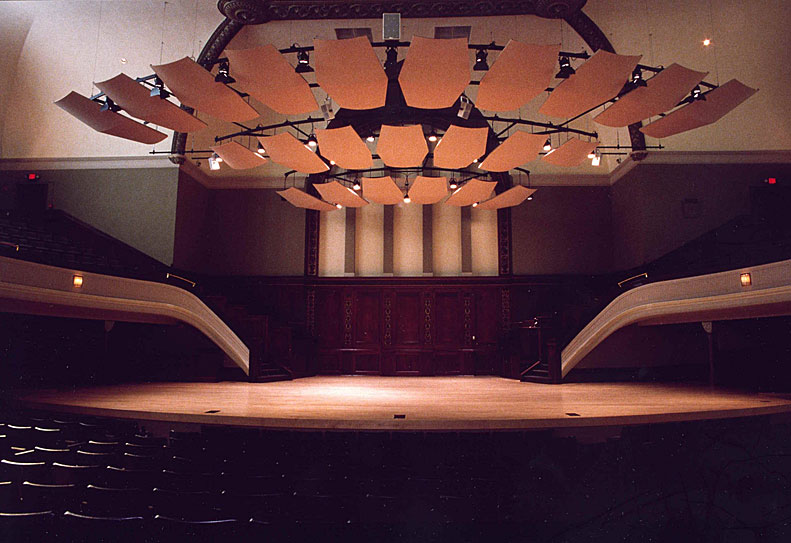
David Zinman conducted the Rochester Philharmonic Orchestra in Mendelssohn’s A Midsummer Night’s Dream, recorded live in Hochstein’s main auditorium (now the Performance Hall) and released on the Vox Cum Laude label. The album’s liner notes describe the decision to record at Hochstein: “The recipe for making a beautiful-sounding recording begins, ‘Take one acoustically glorious room…’ The auditorium of Hochstein Music School in Rochester is just that.”
September 1, 1984
Dr. Carl Atkins is named President & Executive Director (1984-91). Active as a conductor, performer, and lecturer in music styles ranging from opera to jazz, Atkins earned his Doctor of Musical Arts degree in conducting from the Eastman School of Music. A faculty member at the University of Rochester River Campus and conductor of the University Wind Ensemble, he is also chair of Hochstein’s music theory department.
September 1, 1991
Founded in 1991, the Spotlight on Faculty concert series highlights the prestigious Hochstein faculty in a variety of ensembles and musical genres from chamber music and dance to jazz, contemporary, and classical. A key feature of the Spotlight on Faculty concerts is that Hochstein faculty members work together to create their own program and submit proposals to perform on the series.
September 1, 1991
Dr. Margaret Quackenbush is named President & Executive Director (1991-2022). A member of the school’s faculty – teaching clarinet and chamber music – since 1979, she is an active soloist, chamber, and orchestral clarinetist, as well as a founding member of Antara Winds. She holds the Doctor of Musical Arts degree from the Eastman School of Music, along with degrees from the University of Oregon’s School of Music and the University of Minnesota, Morris.
January 1, 1999
The renovated “Performance Hall at Hochstein” opens, the final phase of a nine-year plan to renovate the entire facility. In addition to many student and faculty performances presented on a regular basis, such as Live from Hochstein broadcasts on WXXI 91.5 FM and Spotlight on Faculty series, the Hochstein Performance Hall is a performance venue for many community arts organizations, such as Rochester Philharmonic Orchestra, Rochester Chamber Orchestra, Rochester Gay Men’s Chorus, Rochester Women’s Chorus, Greater Rochester Women’s Philharmonic, National Guild of Piano Teachers, Rochester Flute Association, and Sampler Records.
January 1, 2000
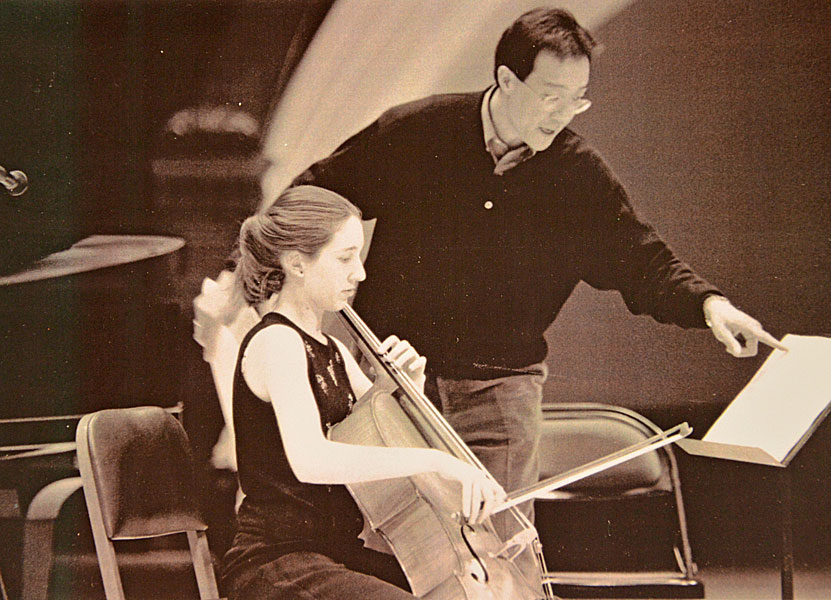
Acclaimed cellist Yo-Yo Ma gave a masterclass for Hochstein students in 2000.
April 14, 2002
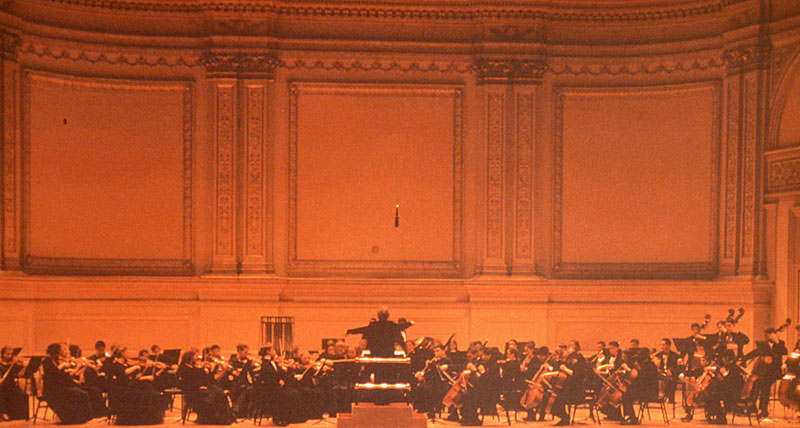
The Hochstein Youth Symphony Orchestra, conducted by Nancy Strelau, performed at Carnegie Hall on April 14, 2002.
September 1, 2007
The Hochstein at Canandaigua extension program, a partnership with the Canandaigua City School District, served the Finger Lakes region until 2013.
June 4, 2009
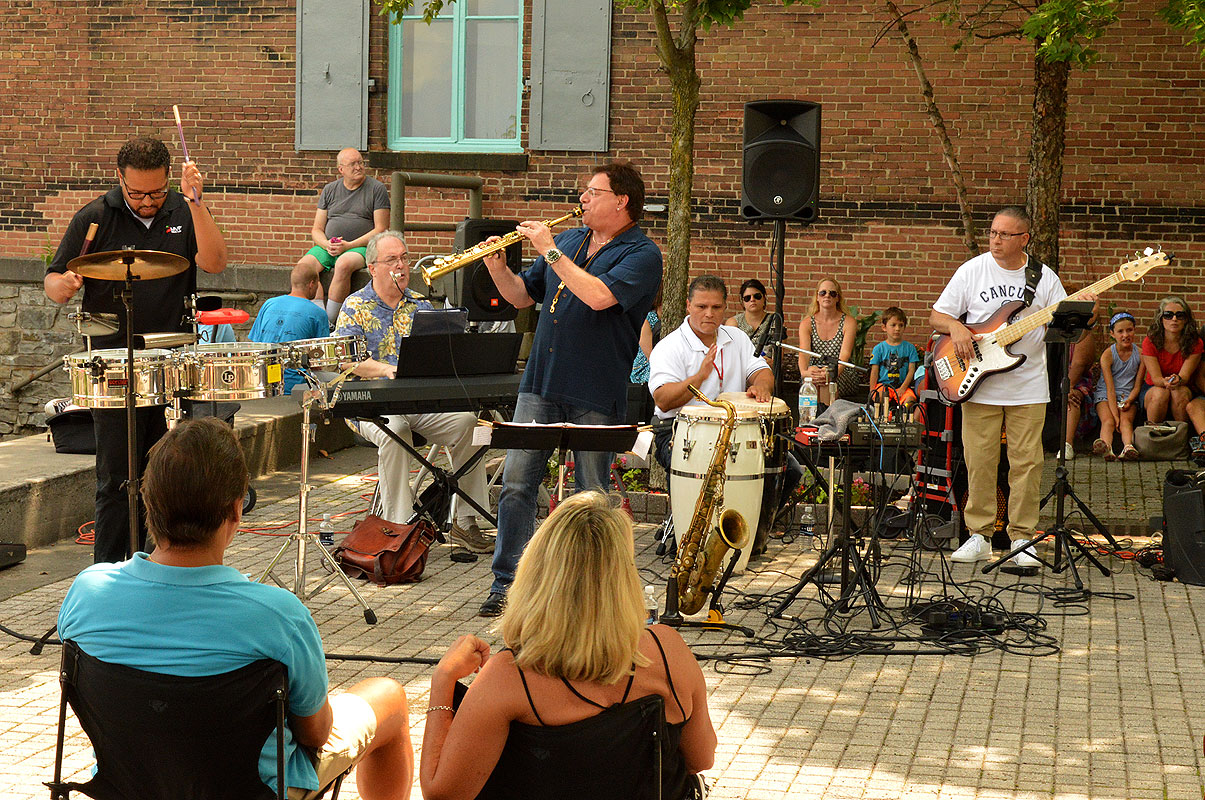
As part of High Falls district’s revitalization effort, the High Falls Business Association teams up with the Hochstein School of Music and Dance and WXXI to hold a series of outdoor concerts on select Thursdays during lunch time in the summer. Hochstein at High Falls concerts are held at Granite Mills Park near the Pont de Rennes Bridge. The first concert season included Po’ Boys Brass Band, Duo Vardanyan, Mambo Kings, John Wiesenthal & Aaron Cotton, Classics Go to the Movies, and Connie Deming.
January 1, 2010
In the late 1960s, the School had a total administrative staff of four. In 2010, the Hochstein School has more than 15. Yet, even with a much larger staff, it would be a daunting project to administer a program on the scope of that 1960s summer program. “The message is that in the end, numbers don’t matter – passion and commitment to the mission that you serve can bring any program to unparalleled heights.” – From Gary Palmer’s dissertation on Hochstein
January 2, 2010
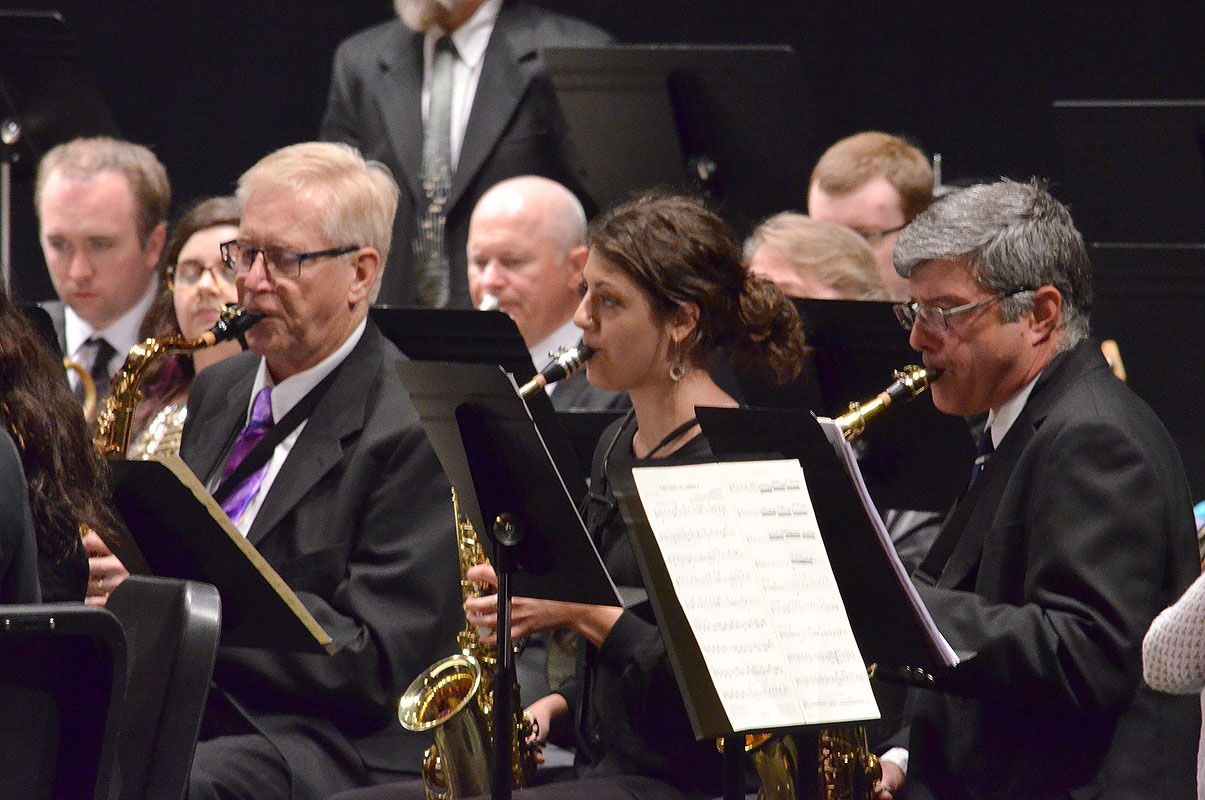
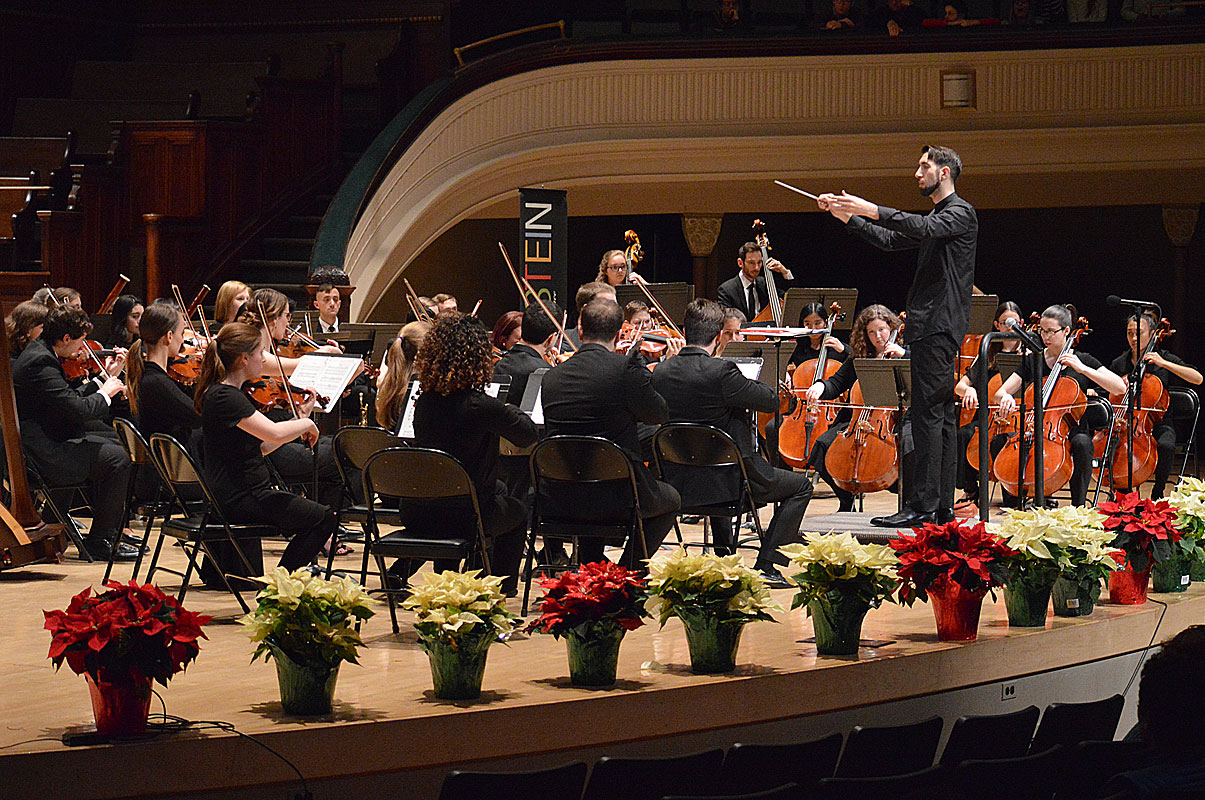
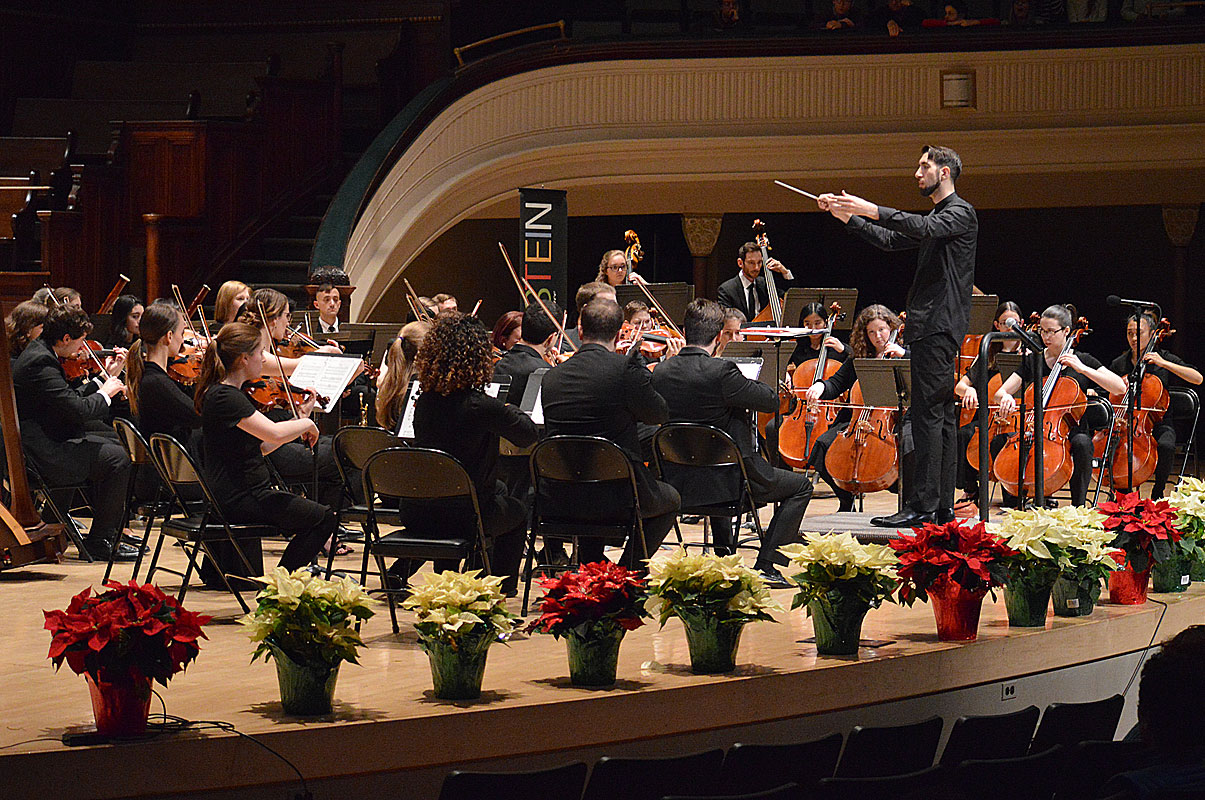
Created in 2010 as a reunion of musicians with connections to Hochstein, the Hochstein Alumni Orchestra has reunited each year to present free, high-quality concerts. “The Hochstein School has a deep history of giving to the community,” said conductor Evan Meccarello, a Hochstein alumnus and Master of Music graduate of Bowling Green State University. “We see these free concerts as a way of giving back. With them, we honor Hochstein’s commitment to the community.”
January 4, 2020
Former students of The Hochstein School return to Rochester to present a free orchestral concert by the Hochstein Alumni Orchestra. This concert marks the 10th anniversary of the Hochstein Alumni Orchestra and kicks off Hochstein’s yearlong centennial celebration.
April 1, 2020
Feature story by Mona Seghatoleslami in City Newspaper with a timeline of important moments in The Hochstein School’s history over the past 100 years, plus many photos from the Hochstein archives.
April 5, 2020
The Hochstein School hosted a virtual event on April 5, 2020, to commemorate the first concert in 1919 and showcase what we continue to build as a community today. The 20-minute video, which premiered on YouTube and Facebook during the 2020 coronavirus pandemic, featured performances by students and alumni, a message from Monroe County, and a video showcasing Hochstein today.
April 8, 2020
An hour-long documentary by Mona Seghatoleslami on WXXI Classical 91.5 FM with stories and music that connect Hochstein to the history of our city over the past century.
July 1, 2022
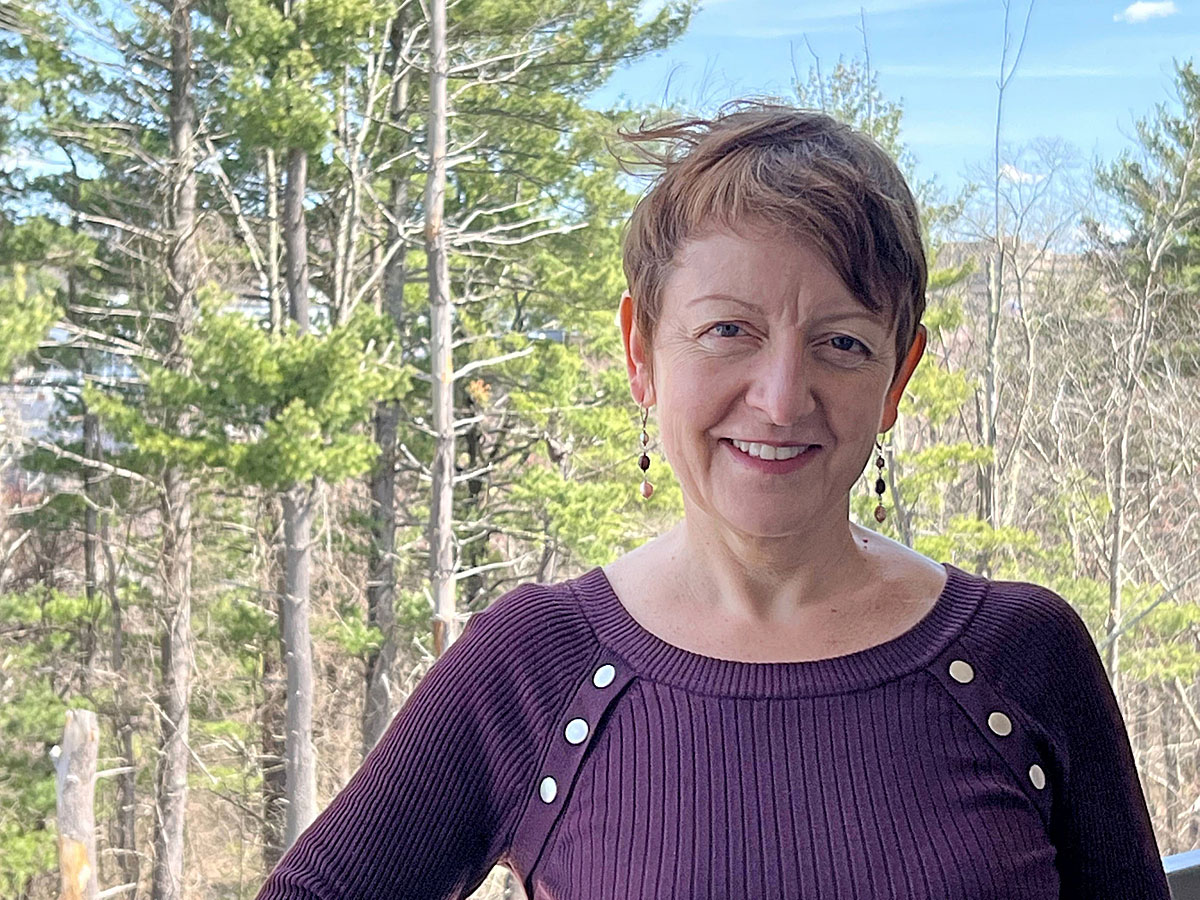
Hilary Field Respass was appointed Hochstein’s President & Executive Director as of July 1, 2022. She was Executive Director of Boston University Tanglewood Institute and prior to that held the leadership role at the community divisions of The Hartt School at the University of Hartford in Connecticut and New England Conservatory in Boston. Respass has degrees in music education and clarinet performance from New England Conservatory and University of Michigan.
October 1, 2024
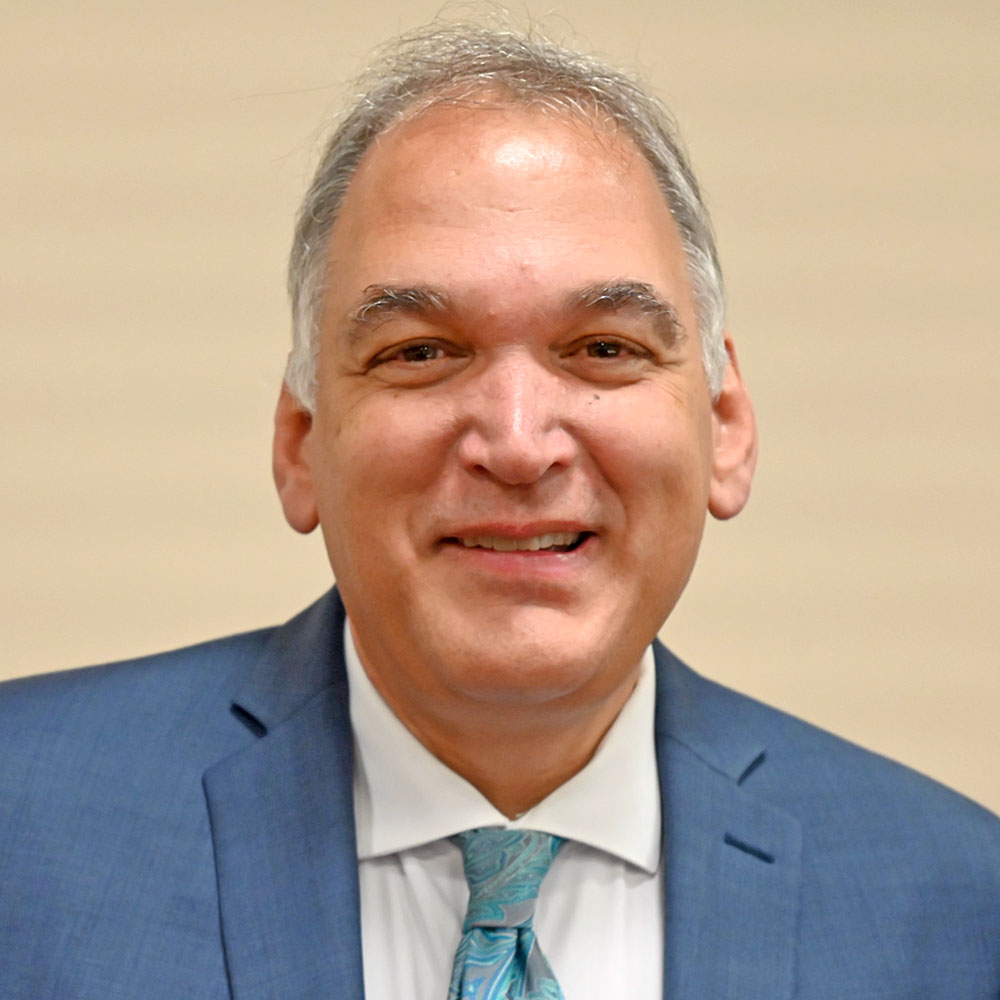
Dr. Gary Palmer was appointed Hochstein’s President & Executive Director in October 2024. Dr. Palmer joined the Hochstein Piano Faculty in 2001. Dr. Gary Palmer received his Ph.D. in Music Education from Eastman School of Music, where he earned a Master’s degree in Piano Performance and Literature; and his Bachelor’s degree from Nazareth College. His dissertation topic was the history of The Hochstein School.